
 Opening Arguments
T3BE76: Accidental Evidence
Professor Heather Varanini is here to get us ready for the Bar Exam with the next question!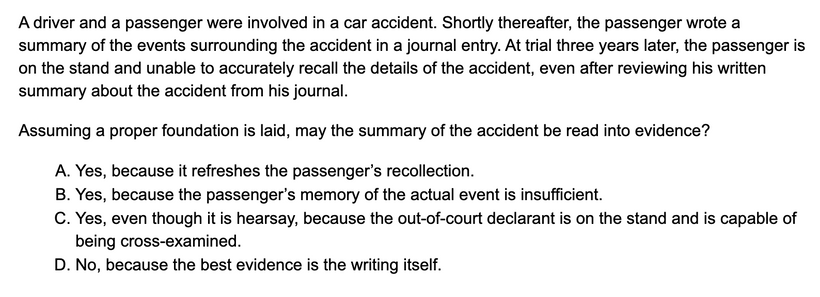 If you'd like to play along with T3BE, here's what to do: hop on Bluesky, follow Openargs, find the post that has this episode, and quote it with your answer! Or, go to our Subreddit and look for the appropriate T3BE posting. Or best of all, become a patron at patreon.com/law and play there!
Check out the OA Linktree for all the places to go and things to do!
This content is CAN credentialed, which means you can report instances of harassment, abuse, or other harm on their hotline at (617) 249-4255, or on their website at creatoraccountabilitynetwork.org.
 Apple Podcasts
 Spotify
 iHeart
 Support on Patreon
Transcript
This transcript was generated automatically and may contain errors — the audio is the record.
0:00:47 Thomas: Hello, and welcome to Opening Arguments. It's Thursday, which means it's time for some practice bar exam. I'm Thomas. That over there is Lydia. How are you doing?
0:00:56 Lydia: Hi, I'm doing great. How are you?
0:01:00 Thomas: Good, good. Anything new? What's going on?
0:01:02 Lydia: Oh, you know, just hit episode 30 on Gavel Gavel.
0:01:08 Thomas: They said you'd never do it.
0:01:11 Lydia: Yeah, we just hit Episode 30 with a very exciting couple of guests that we were so pleased to have on. These Stephanie Jones as lawyers.
0:01:22 Thomas: Stephanie Jones is lawyers. Yeah, that was really interesting. A lot of fun. People should check out Gavel Gavel.
0:01:27 Lydia: Yeah, yeah, yeah. A couple of big names out of Quinn Emanuel, too. So, you You know, like if you're interested in seeing like big law and how they operate and how they discuss an ongoing case, definitely tune in. These are some big names. Kristen Toller, Mara and Shaw.
0:01:40 Thomas: I have their rookie cards. Yeah. Yeah check it out, everyone.
0:01:45 Lydia: There's like a patch from like a business suit. Thank you.
0:01:48 Thomas: One that's a really good joke jeez and then the farm system is like the clerkship you're like oh man this person's clerking on this court you know and then they oh they got drafted by clarence thomas jeez what a dead end uh yeah
0:02:04 Lydia: You know people said that baseball law wasn't going to come back and it's back, baby. You just needed to get me on the show. It is more baseball. Yeah, I think so. I think it's more baseball
0:02:08 Thomas: I mean in fairness I was still thinking of hockey but yeah sure I guess that is more like baseball I guess kind of we'll let the listeners decide anyway it's time for thomas takes the bar exam today and that's where of course we grab heather veronini certified if there's such a thing not sure bar prep expert it's what she does for a living she's fantastic at it first she's going to give us the answer to last two weeks ago's questions since I took the time off and then we'll get our fresh question 76 so can't wait to get on over to it and then of course we're going to see who the winners are who play along online then if If you're wondering why Lydia's here, that's because I want her to be here. So shush.
0:02:20 Lydia: Yeah chime in
0:02:53 Thomas: No, that'S because also she joins us for the patron shout outs at the end. Each and every week, we shout out our patrons on patreon.com slash law. You could be one too. We love giving shout outs. We love reading the names. Super fun each and every time. So that's our agenda. And why don't we get to it? So after this break, we'll be on with Heather Varanini and Lydia. Sit tight.
0:02:56 Lydia: I sure do. They're my best friends. I would never miss it. Will do.
0:03:14 Thomas: Go check your judge cards. Check your categorize them by team.
0:03:19 Lydia: Gotta get them in the sleeves Yeah, yeah Don't want to lose any value
0:03:20 Thomas: Yeah, alphabetical. Oh, that's true. We'll see you in a minute.
0:03:29 Ad: [Ad break 1 — ad music]
0:03:29 Thomas: Heather Varanini, how you doing?
0:03:31 Heather: Doing pretty good. I have not been growing any lettuce. How about you?
0:03:35 Thomas: But have you been smoking the devil's lettuce?
0:03:38 Heather: The only piece of advice that you'll hear any lawyer give for free is, if the cops ask you questions, don't give an answer. So don't incriminate yourself.
0:03:45 Thomas: Okay. Are you calling me a cop or something? Jeez. That's fighting words. I don't know if there's a greater insult that someone could...
0:03:53 Heather: Call you a narc. No, I'm just kidding. I'm teasing.
0:03:53 Thomas: Yeah, call me... No, no. Even a narc is better than a cop. I wouldn't dream of being a cop, horrible. All of this nonsense is about last week's question. Why don't you remind us what question 75 was?
0:04:06 Heather: Well, our friend Joe is a farmer and he grows lettuce on his farm. And then he conveyed 50 acres of his property, quote, to my sister, her heirs and assigns so long as the premises are used for agricultural purposes. So we're trying to figure out what Joe's interest is on the property as a result of the conveyance.
0:04:23 Heather: Was it A, nothing, B, a fee simple subject to condition subsequent, C, a possibility of reverter, or D, a right of entry? So you clocked this as a real property question.
0:04:34 Thomas: Not sure how I did that.
0:04:36 Heather: Well, you would be correct. It's a real property question, hopefully that was obvious. I like to say that anytime land is involved, typically interest in property, Your ears should perk up as property. The issue here is actually about the bundle of sticks or the leaves of lettuce. So you were right there. What this is trying to get at specifically is present estates and future interests. This is also known as estates in land. And this is part of the goal here is that real property wants to know, or they need to see that they're tracking who owns what at all times, right? There can't be a gap in possession. And so present estites and future interest helps us to do that. But it's also a point of contention, I'll say, or stress for a lot of law students because it can be a little bit confusing. So hopefully as we work through this question, we can try to make it make a little Bit of sense. So I'll start first by saying present estates are also known as present possessory estates. And that's when we're starting to think about who owns the land right now. So you had talked a little bit about as you were working through the questions. Oh, I think this answer talks a little bit about the sister owns this right now some of the answer talks about owner owning the land right Now, that matters. So when we're thinking about present estites, I like to think think of it this way. I like to think of a stick, speaking of bundled sticks, and on one side of the stick,
0:05:46 Heather: We have a present estate to figure out who owns what right now. And then on the other end of the stick, We have a future interest, which is who owns the land in the future or who might have an interest right to it in the feature.
0:05:53 Thomas: And then we eat the stick like in Lady and the Tramp and then we meet in the middle.
0:06:01 Heather: Yes, that's exactly it. But for every present estate, there's an associated future interest on the stick. So when you have one present estate in mind, there's going to be basically one associated future interests, which I'll talk about. So I I think it helps to think of as a stick with two ends as we work through that. But I promise there'll be some information in the middle. The multi -ended sticks.
0:06:17 Thomas: A stick with two ends. I can't imagine that. I only know the other kind. Or one end. Yeah
0:06:29 Heather: Single -ended stick. You were talking about answer choice B, a fee simple subject to get just subsequent, being something you thought related to the sister. I heard you say you thought that this talked a little bit more.
0:06:38 Thomas: Seemed more like what it was the sisters thing, but I don't know if it would. If the sisters would have been, you know, fee simple with the possibility of revert or would have been like, I don't know if that's how hers would have Been, but, but it could have been conditioned subsequent as well. I don' know. But it sounded more like hers.
0:06:52 Heather: Well, you're right to think that that language was talking about a future or it's a present estate. State. So that language, you're right, was trying to get at who owns the interest or the property at this time. And then the other answer choices, let's say C and D, right, a possibility of reverter and a right of entry, that's thinking about the other end of the stick, right? The future interest. I'll explain this. So you are right to think, oh, this feels like it's kind of happening now, who owns it right now? And so that's one type of answer choice. And the other types of answer choices are the future interest, those are different. And this answer choice, this answer or this question is asking about Joe's interest.
0:07:29 Heather: So we're actually fixated not on what the sister has, but we're fixated on what the owner is likely to have in the future. So he's at the other end of the stick as a sister. Does that make sense?
0:07:40 Thomas: But I feel like you'd have to know, I feel Like you'd already have to Know enough to know that. You know what I mean? Like, I think most people who aren't lawyers are going to be like, what is fee simple? I don''t even know what the hell that is but
0:07:50 Heather: And to your point, a lot of times when students get to this place in real property, they feel the same way, even when they've gone through the whole thing. And I'll explain why oftentimes. A lot of time, what will happen is this. A A lot of times I think you've probably heard or know that a definition or a vocabulary word is related to its definition. Imagine that we're now in an area of law, this particular part, in which they almost have very little to do with each other. Listen, listen.
0:08:13 Thomas: They're trying to f with you you can say it they're the long dead lords of feudal whatever that came up with all these yeah terms
0:08:21 Heather: Yes, England. Yeah, yes, that's exactly it. Some of them are carried over from England and the old time Black's Law and all that other stuff. And we've kept the terminology even though it doesn't have any any really relation. So a lot of times when you're a law student or you're studying for the bar, it's about rote memorization and that's what you have to do. So really to your credit, Thomas, you figured this out without knowing any of that.
0:08:43 Heather: So you reasoned your way into all that, which is like, cut it to you.
0:08:43 Thomas: Well I kind of I remember fee simple I remember that I don't remember exactly what it is it means but I do remember that that's like a way you can own a property now rather than like in the future
0:08:55 Heather: And that's exactly, it's a present estate right now in which you own all of this text. You own everything.
0:09:01 Thomas: All the lettuce baby right
0:09:03 Heather: Yes, on the lettuce. Yes. That's a fee simple. It's also known as a fee, simple, absolute. That is your, I own it all. And there's no associated future future interest because you're owning everything right now. And a lot of times the way in which you see this on an exam is you'll just see a conveyance to my sister. If it stopped there to someone else and it stops, that means that you're giving over all of the sticks you're giving over. Everything I have, no, you just give it all over fee simple when you're giving to sister, to brother. Yeah.
0:09:25 Thomas: And are you giving it over fee simple or do we not know from that information be simple okay so fee simple is like the standard like you just have it like that's all okay this isn't I don't think super important to the question but what would you call her answer because the sister has to be lacking something like if joe still if I'm right and joe has something you'd have to say well okay regardless of anything else you know that she doesn't own it fee simple period because there's a there's some sort of condition so would you call is b what you would call hers did I identify that that might be what you call hers or would it be called fee simple something something
0:10:00 Heather: Yeah, so hers is actually called something different. Hers is called a fee simple determinable. And I can explain why. So she has, like you you were saying she has a present interest. That's what the sister has now. So the reason we know that she has if he's simple determinable is there's language in the conveyance that tells us the language that says so long as, so long, as, and that's considered durational language. And the durational English tells us that it's the tip off to how we know she has this type of present estate fee, simple, determinable. That kind of how they're connected is the language oftentimes will be the tip -off for the type of presence state. I hope that makes a little bit of sense. Maybe if I give a counterexample, that might help. Yeah.
0:10:02 Thomas: Else okay okay okay yeah well no I I mean I think it's just the terminology I was just asking I thought it would be an interesting way for them to do a test trick if they had made b be like her interest so that's a way to get someone to pick that answer if they you know misinterpreted reading fast or something that's all I was saying
0:10:53 Heather: Yeah, that's a good note. And it would be, like you said, also a really good trap answer to have, right? Fee simple determinable. It wasn't. Instead, a fee simple subject to condition subsequent is also a present estate. But the way that we know that we have a fee simply subject to conditions subsequent, again, is language. The language is conditional.
0:10:58 Thomas: But it wasn't that
0:11:11 Heather: And the tip -offs are, but if provided that on the condition that. So if If this said instead, instead of so long as, if it said, but if, if it said provided that, if its said in the condition that, then we would have a fee simple subject to condition subsequent.
0:11:11 Thomas: Apparently hmm
0:11:25 Heather: But we don't. And this so long ask tells us we have this fee simple determinable. I promise that this matters. So the other end of the stick of the fee simple terminable is our future interest, right?
0:11:25 Thomas: Okay
0:11:36 Heather: And that's what we care about right now. We're trying to figure out what Joe has. What does Joe have? The one that he has is going to be the possibility of reverter. C, we're right. The answer choice is C.
0:11:36 Thomas: Yeah oh wow yeah it was a pretty simple one so you didn't have a lot to say about the other ones I
0:11:46 Heather: And I'll explain why. You're like, yes, I got it.
0:11:52 Heather: Well, I'll Explain it. So he has a possibility reverter, which happens automatically. So what happens is to what you said exactly, which is, let's say she decides that she wants to have a nightclub. She wants to build a bunch of Airbnbs on it.
0:11:57 Thomas: Guess well it better be produce themed or like it better be or I mean agriculture you could get some like cows going right I feel like that counts right or does it I don't know we'd have to look in the definitions agricultural no that that probably has to be growing stuff. Doesn't it? Oh, I actually don't know, man. Hmm. It's a question for the lawyers.
0:12:20 Heather: That's a good question. But listen, that'S what a lawyer is for. Isn't this what Thomas, isn't this what Thomas's law firm is for?
0:12:24 Thomas: Yeah, there we go.
0:12:25 Heather: Yeah. And so what will happen there is that it'll happen and automatically. So like I said, let's say she has her nightclub, then automatically it will revert back to Joe.
0:12:32 Thomas: And then Joe has a nightclub. It's kind of weird how it is though. It's like so long as, and it's like the minute you finish your remodel, that'S like, and last night. Okay. Then now it's not mine. It's kind of weird. Yeah.
0:12:35 Heather: I hate it. Yeah. And part of how this is different from answer choice D, right of entry, is that the right of entry is connected to the fee simple subject to condition subsequent. So if we imagine our stick on the present estate is a fee simple, subject to condition subsequent, and on the other end of the stick is the right -of -entry. So what that just means is that similar to the possibility of revert, the present estate, it still is with the grantor, the owner. So it can still go back, but with the right of entry, it has to be exercised. So usually that means you have to go to court. So, it doesn't happen automatically. It's not just going to revert back. You have to take some kind of action to take the conveyance back.
0:13:24 Thomas: Oh, oh. Well, I'm glad I was too dumb to be fooled by that. I just read that as like, you can enter onto the the property, like one of those, what are those called where it's like, or easement. Yeah. Like I read it like, so are you saying it's not that it's right to enter back into ownership of the property? Yeah. A right of entry. So I really think that should have been my second chance then probably. If I'd read that right, if I'd red that to be entering back into, what is the entry? Is that, so that is like entering back in to owning the property?
0:13:32 Heather: Like a license or like an easement. Yeah.
0:13:40 Heather: But like I said too, some of the problem with the language is that it doesn't really bear a whole lot of relationship, which can make it confusing.
0:13:59 Heather: Great question. No idea what that language has to do with the actual definition. If it helps to think of it that way, to remind, to remember it, I would stick with that. Yeah.
0:14:07 Thomas: Okay. I guess. So what what does the, what is a right of entry mean then?
0:14:10 Heather: So it literally means that the original owner or what's referred to as the grantor, that they have the right to take the land back.
0:14:17 Thomas: Yeah. Okay. So the point I'm making is that should have been my second chance answer just because that was more closely plausibly the site, the other thing it could have been. And so just to make sure we're on the same page though, it's not that because you're saying the way this is with the reverter thingy, that's automatic versus the right of entry is something that Joe would like have to proactively kind of do.
0:14:36 Heather: Exactly. And there's one more thing that differentiates them. When you start to think about the different types of interest, right? Whether it's a fee simple simple determinable, or if he's simple subject to addition subsequent, those are separate sticks, meaning that there's no crossover between them. You cannot pair one type of future interest with another type of present estate. They're on the same stick and they can't be swapped.
0:14:57 Thomas: Not even with like a dongle from like the Apple store.
0:15:00 Heather: Listen.
0:15:02 Thomas: I have a stick, a USB stick. My stick is actually USB -A and then the end of their end is a USB -C stick and I can do a dongle and then they'll... So you're saying there's certain ones and are they literally always these exact words or are they just certain different kinds of interests that you couldn't pair because they're not compatible?
0:15:22 Heather: Yeah, they're not compatible just because that's the rule tells us that they aren't. And like I said, this is where the rote memorization comes in when you're a law student or when you starting for the bar.
0:15:29 Thomas: Sure. But also I feel like you can determine it based on what the transaction was, right? You could say there would have to be something that gives him a right of entry, right? There would have had to be something in the conveyance or whatever.
0:15:40 Heather: Yeah. So a lot of times you can also see language, but that sometimes that might not be the case.
0:15:43 Thomas: Yeah. So wait, which things weren't compatible? What's our USB-A and USB-C here?
0:15:47 Heather: Great.
0:15:47 Thomas: Which two things weren't comparable? Again, remind me.
0:15:49 Heather: So anything in the present estate side, so anything that's a fee simple determinable or anything that's a fee simple subject to condition subsequent, there's no crossing the streams, so to speak.
0:15:55 Thomas: Well, but crossing to what? Because are you saying there's no future stick at all that someone has in that?
0:16:03 Heather: No, what I'm saying is you can't swap out the different future interests. They're related to the, yeah. Yeah.
0:16:08 Thomas: Right. Sorry. So which future stick went with what is what I was trying to ask.
0:16:13 Heather: So a fee, simple subject tickets and subsequent has a future interest. That's called a right of re -entry right of entry or power of termination. So you might hear those different ones.
0:16:21 Thomas: Okay. So that's essentially the condition kind of like conditions subsequent. Okay. Right.
0:16:25 Heather: Yeah, like you've got to, that's exactly it. It comes back. And then for fee simple determinable, the future interest is the possibility of revertor.
0:16:32 Thomas: I get you. So you can't be like, well, so B can't go with C. You can't be fee simple subject to condition subsequent. And that condition can't be like a reverter because that's just incompatible stuff. Okay, cool. Interesting.
0:16:43 Heather: Yep, that is exactly it. And like I said, this tends to cause a lot of headache. And I think because it is never clear.
0:16:49 Thomas: I don't get it. It seems perfectly easily clear. Yeah.
0:16:53 Heather: Well, listen, I like this question because I think it is a little bit more straightforward because there is stuff to it.
0:16:58 Thomas: Yeah, it seems pretty easy, but boy, it's good that I didn't know enough to be confused because I think right of entry was a solid contender. I don't think I would have gone for it because reverter seems pretty clearly what it is. But yeah, no, I did definitely read D completely incorrectly. So I'm so glad that I know that and I will forget it later.
0:17:12 Heather: And you were right to eliminate a right because you said listen it can't be nothing so the reason I didn't say too much about that was because you explained it and you're spot on
0:17:18 Thomas: Yeah. Yeah, yeah. Wow. So, I got three in a row correct. Is that what you're telling me? I just need to make sure that we're 100 % here.
0:17:31 Heather: Yes you're on a hot streak you'll be selling the devil's lettuce before you know
0:17:35 Thomas: I know where I'm going to spend my T3B cash that I earn. It's on the down list. Wow, I've climbed back to 57 points. So I'm 41 of 71 for 57 .75%. My second chance bar exam. That also keeps steadily climbing up. It's at 84 .5%. So there you go. Wow. Real property. I now, oh, I've got further statistics, everyone. That brings my real property score to 37 .5%, three out of eight. Not great, but that's okay.
0:18:07 Thomas: Yeah, I got the last real property one. I got wrong. And the one before that, I also got wrong and we won't go back too far.
0:18:00 Heather: It nice nice it's an
0:18:14 Thomas: But I've gotten a lot of them wrong. Nice to go the other way. Cool. Well, this is amazing. I'm sure that everyone else got this right, but I'm sure they also had better puns because I feel like I'm going to be honest, my pun game weak on this particular question. So if there's an area for improvement, it's definitely there. Let's see how the folks online fared. Let'S find our favorite answers.
0:18:14 Heather: Improvement there was a before I forget there was a news story that I heard this morning about they're trying to pass a law that would force priests to report when they have someone confess I think I think it was others maybe even other priests confessed to them that they were pedophiles and there's a fight yeah I know I was like that's great well it's funny because yeah well the priests are not surprisingly fighting it really hard I'm like that was not a good look motherfuckers
0:18:41 Thomas: Oh, oh yeah. That'd be great. LetS pass that. Well you got to balance the pluses and and minuses of that. I mean, on one hand, you'll know if someone's abusing kids. On the other hand, though, nothing. So, hmm.
0:19:07 Heather: It just reminded me of our question our evidence question about the yeah because there were some you made some good points I think other people did too about what constitutes anyway I thought it was it just just reminding me of that. And I thought, I
0:19:13 Thomas: Yeah. And is that a California thing or a nationwide thing?
0:19:19 Heather: Can't remember if it was a Washington state or nationwide.
0:19:21 Thomas: Oh, a different state? Yeah, sure. We don't have a huge... I mean there's obviously Catholics everywhere, but it's not like we're a state you would associate with being on the forefront of Catholic law. Well, they should pass that. That's good.
0:19:32 Heather: I agree. I'm like, come on. I just can't imagine being like, no, we shouldn't. I mean, I get the thinking they're thinking, but I'm, like, I don't know.
0:19:39 Thomas: I don't know, man. I feel like I will go with you to a certain extent that you ought to be able to confess some bad stuff but I feel like it's like with you know what is it like therapists or other mandatory reporters it should be just mandatory reporter thing like if you've done something horrible or you're in danger to yourself or others kind of thing then sorry no you know like why is it any different than that
0:19:59 Heather: Yeah I agree my job too is the same where it hits a certain threshold. I am a mandatory reporter. It's like, yeah, I'm I agree with that. I don' see why that's a problem. I dunno. Yeah same. Is it always? Yes.
0:20:05 Thomas: Why would they not be this makes no sense all right well everyone listen to us we have the right answers and it's time to look at our winners and we're gonna start with blue sky and that's It's just open args on Blue Sky. And we've got one entrant, one right answer. And that means one winner. So efficient. Thank you so much.
0:20:24 Thomas: I mean, it's also cool if a lot of you do it. But if one person just does and nails it, you know, why do you need any more? That's great. Dave Podnar at ProfPod says, I think it's all so C, but nervous. Would the bar have two C in a row? Are they playing 5D chess with us? If I stare deeply at the grid of answers, will I see a hidden image like a magic eye? Or has it been too damn hot and my brain is fried? Well, I don't know what all that was. But yes, I also relate to it heavily, but it was C. And you got it right, Dave Podnar. Thank you so much for playing. Love it.
0:20:53 Thomas: And now, how about we go on to reddit .com slash r slash open args. Who's the winner there?
0:20:53 Heather: We have two people I wanted to shout out. The first is I'm the Mary Romy who had a great answer, but I really wanted to highlight that says, Tom, I'm impressed. I only took property law this spring and still had to leaf through my notes to refresh my memory. And then we've got Mikey Malloy, who was also correct and said that Joe has created a fee simple determinable by using durational language. I think it goes on to provide a really good explanation, but then also says that as someone currently studying for the bar, I sympathize with Thomas's hatred of real property it's a real pain in my ass my long -suffering girlfriend has now heard me complain about the rule against perpetuities so many times that she could probably do a decent job yeah answering a rap question herself and she says jenny I'm sorry and I want to be with you for life plus 21 years
0:21:32 Thomas: In perpetuity. Yeah, you could almost say. Oh, nice. Wait, is this a proposal on the... If anyone wants to do an on pod proposal, let me know. We're in for that. Fantastic. Or a divorce from real property. Or actually an on -air divorce. I'll do that too. You know, why not? It could be fun. Oh, good times. That's awesome. Congrats to those winners on Reddit. And we've got some great ones on patreon .com slash live. That's where the champions go to play. That's the high rollers go. That's you know, remember, it's got to be my favorite Bond movie was that first Daniel Craig one they made. That's why he and that that actor with the eye bleeding stuff.
0:21:43 Heather: Roll yours yeah yes
0:22:17 Thomas: That's Where They Go to Play, T3B. It's the High Rollers table. There's some espionage. There's Some Stuff. It's, it's interesting over here, but yeah. So great answers and great patron names. Here's a good one. Scott Seligman, that magical phrase, so long as is legal ease for this gift comes with a free booby trap. So Joe handed over his farm with a shiny booby wrap in case his sister plants an AI server farm instead of avocados. Boom. The land reverts back to him. So C, a possibility of reverter. You nailed it. That's it.
0:22:47 Thomas: And it was just, uh, agricultural purposes. Yeah. I wonder how much, like what the line would be there. Like if you have, if you grow one avocado plant and then the rest Bitcoin farming or whatever, you know, I don't know.
0:22:57 Heather: That's a good question uh
0:22:57 Thomas: Could you, could you even argue while I'm Bitcoin farming? Well, they call it mining. Nevermind. I'm farming karma for my Reddit account. You know, like that's agriculture.
0:23:08 Heather: -huh digital agriculture agriculture.
0:23:08 Thomas: Anyway, uh, judges hate this one weird trick. There's some great ones. I got to shout this one out. I like my podcast. Like I like My Coffee. Chunky. That's a gavel head right there. Darn it. Can't come up with a good agriculture pun. But yeah, I think it's C. B seems like the exact description of the sister's interest, and D doesn't seem appropriate as long as the conditions are met. There's nothing stating he would retain any right to enter the property. A seems facially inaccurate as well, so yeah, they nailed it. I also just want to shout out the name. I need a couple weeks before I can start doing names again. I can't imagine it being anything other than C. And then they explain a reference that I've already forgotten either I or somebody else made, but thank you so much for that. And finally, Finally, I just have to shout out this last one sentence answer. Gen C .J. Hudson says, I think it's B -E -E. Oh, shoot. That was last week's pun. How irrigating.
0:23:58 Thomas: Very silly. Oh, that was a lot of fun. Well done. And I don't look now, everyone, but I'm on a three question streak. Can I make that? I don'T even dare utter this phrase, but can I make that a four question streak?
0:24:11 Heather: Yes.
0:24:12 Thomas: The likes of which I've only seen, it looks like I've seen, I have all the results from this current iteration. Okay, I have hit two four -question streaks before. That has happened. That's why my score is any good. I did have a seven -questions streak, but that may have included repeats. But actually, I got like all the repeats wrong now that I think about it. So yeah, I had a seven questions streak. I think what was happening is Matt was just giving me like baby's first bar exam questions probably, you know? So current record for me is seven -questions streak. Don't think I'm matching that, but can I get four? We'll find out. After this, we'll get question 76.
0:24:25 Heather: Dang that's impressive.
0:24:47 Thomas: This message is sponsored by Greenlight. Folks, this is a true story. When Lydia saw Greenlight come through as a sponsor, she told me she literally had just been looking at it to get for the kids. Greenlight is a debit card and money app made for families that helps kids learn how to save, invest, and spend wisely. Parents can send money to their kids and keep an eye on how they are spending and saving. Meanwhile, the kids and teens build money confidence and skills in a fun, accessible way that feels more like a game than a lesson. Oh, this is my favorite part. The Greenlight app also has a chores feature where you can set up one -time or recurring chores customized to your household and reward kids with allowance for a job well done. When the Tooth Fairy first gave my kids cash for losing a tooth, they literally had no idea what it was. It was meaningless to them. And I'll tell you, that's actually not that crazy. When you think about it, everything's digital. And if you are trying to teach them about money and you're using money technology from the 1800s, I mean, that'S one way to do it. But this is so much more relevant to today's world, and it's the world that they are growing up in. I love Greenlight. I am so excited to get started with our kids. And I think it's going to actually be more meaningful to them to learn about money in a digital format than it is when I gave them their first dollars. Greenlight is the easy, convenient way for parents to raise financially smart kids and families to navigate life together. And maybe that's why millions of parents trust and kids love learning about money on Greenlight, the number one family finance and safety app. So don't wait to teach your kids real -world money skills. Start your risk -free Greenlight trial today at greenlight .com slash opening. That's greenlight dot com slash opening to get started. One more time, greenlight .com slash open.
0:26:27 Ad: [Ad break 2 — ad music]
0:26:27 Thomas: All right, Heather, I'm ready. I'm okay. Here we go. I want to I want the streak so bad. Okay, here we go, let's have it.
0:26:31 Heather: A driver and a passenger were involved in a car accident. Shortly thereafter the passenger wrote a summary of the events surrounding the accident in a journal entry. At trial three years later the passenger is on the stand and unable to accurately recall the details of the accident even after reviewing his written summary about the accident from his journal.
0:26:50 Heather: Assuming a proper foundation is laid may the summary of of the accident be read into evidence? A. Yes, because it refreshes the passenger's recollection. B. Yes because the passenger s memory of the actual event is insufficient. C. Yes even though it is hearsay because of the out -of -court declarant is on the stand and is capable of being cross -examined.
0:27:09 Heather: Or D. No, because the best evidence is the writing itself.
0:27:08 Thomas: Hmm, wait, no, because the best evidence is the writing itself, but it's may the summary of the accident be read into evidence? Oh, crap. Does that mean? I just assumed it meant submitted into evidence like, hey, here's exhibit whatever. But based on answer D, no, because the best evidence is the writing itself. This sounds like they want. I thought I had maybe a handle on this and then that threw me for a loop. It sounds like their saying, can the person testifying just read the summary into evidence? Yeah, that must be what that means, right? Because it doesn't say like, may the journal be entered into evidence. I feel like that's what it would say. It would be like, can The Journal be entered Into Evidence? I think I do have to interpret it like they're not, for some reason, entering the journal into evidence, but they're trying to just read the summary of the accident. I don't really know why that's read into evidence. Isn't that just like part of the testimony? I mean, I guess normally when you have someone read something on the stand, I think almost 100 % of the time of that, that means it's an exhibit already. Like that thing is going into evidence so from that perspective, like just thinking about that, maybe there's something to this answer D, but I haven't even gotten there. There, but I'm just trying, I usually try to give my prima facie and I feel like this is too complicated to give a first instinct answer. There's a lot going on here, so that would be worthless. But anyway, then instead, why don't we just call this for what it is? It must be an evidence question. I can't imagine it being anything other than an evidence question, so I'm going to say it's an evidence questions. Enter that into evidence. Okay. Shortly thereafter, so the passenger wrote a summary of the events surrounding the accident in a journal entry. At trial three years later, passenger is on the stand unable to accurately recall the details of the accident even after because there's a whole thing we've talked about before with the like, can you have the notes? And it's kind of interesting if I remember right. I believe you can have notes to refresh the person's memory. But then I also think that means like the other team, the other lawyers get to see those notes. Like I think that that makes that fair game or something. But I don't know if it means you enter them into evidence that I actually don't Know 100%. That. Hmm. Never thought about that. But also I think the, the interesting thing is I think the rationale of having the notes is, oh yeah, it refreshes their recollection. So it's just like a memory aid because you're, you, the confusing thing always about the hearsay is any statement out of court given for the truth or falsity. And I always forget if that's actually a word of the statement itself kind of thing. And then you got exceptions to hearsay. And then you've got the other thing, you've had two things that are so effing confusing. One is like like things that just aren't hearsay, like they decide they're not hearsay. Like they're just written out of the rule. And then there's stuff that are exceptions to the hearsay rule. And that's a different thing because those are considered hearsay within an exception. And the first thing are considered just not hearsAY. I don't know if that's going to matter here, but I've failed enough of these to kind of remember that basic architecture there. And so the reasoning of allowing the notes is it's not, you're not submitting the notes into it. Yeah, I think they don't go into evidence in the traditional thing I'm talking about, the normal scenario, because you're still ultimately, it's the witness giving their testimony. But I think the thinking is like, yeah, well, okay, they're going to refresh their memory. That's still their testimony. That still sent them making the statements in court. But it's like, I think it's just sort of a practical consideration. Like it's better off if you let someone refresh their memory and then maybe that allows them to like actually remember something and then they would know more details about it. So I think that's normally what goes on. But here in this scenario, they are like, hey, here's these notes that you can review of the the summary from your journal. And then the passenger's like, I don't even know who wrote this. I can't, I still don't remember. So that's a new one. I haven't thought about that. Now it's saying, assuming a proper foundation is laid. I don' t know what that would mean. That seems like it's part of the very question we're asking here. I d' n't know what a proper foundation would be other than, I guess, establishing like, I don'' t know, like chain of custody. Like, yes, these are, this is my journal. Yes, I wrote this at the time. You know, like it's that kind of thing. So assuming, I guess we'll assume it's all that. Like assume you establish, yes yes, these are my notes from that time right after the accident. Then it's saying, okay, can the summary of the accident be read into evidence? Gosh, is that different than just submitting it into evidence. I think it, I think It is. Okay. So a yes, because it refreshes the passenger's recollection. I Think that's gotta be no, I Think a is what I was talking about. And that like, if the question were, can the passenger use their notes? Then I think the answer would be yes, Because it refreshers the passenger's collection. I I think that's all A is a no. No on A. B, yes, because the passenger's memory of the actual event is insufficient. I mean, that's plausible. Maybe if it's like, I could almost think of it like one of the exceptions to hearsay being if the person is unavailable or whatever to give that testimony. You could almost treat it like that, where it's their memory. If someone loses their memory, that's another evidence -y question, hearsay question. Like, well, they wrote a book about it. Normally, it's well, no, they still have to say it because that's hearsay. But if they can't remember, then it's like different if they're unavailable. So I don't know if you would look at it through that lens. I don'T really know about because the passenger's memory of the actual event is insufficient. Insufficient for what? I donT really love that wording because you might be able to say why this is an exception to hearsay. And it would be yes, because the messenger doesn't remember. Like I could imagine that being an answer, but yes, Because the passenger'S memory of the actual vent is insufficient. Insufficient for what there's no like rule that says someone one has to have a memory of the event or whatever. Like I, it sort of implies that something needs to happen here. Like this, this evidence needs to be in and it's like, well, yeah, the memory is insufficient. So we need the summary. I don't know if that makes sense, but I don' t think that's right. So I'm actually pretty low on B. I think A and B are kind of not it. A for sure. B, I'm like 10 % chance it could be an answer, but okay. C, yes, even though it is hearsay because the out of court declarant is on the stand and is capable of being cross -examined. That's pretty plausible, you know because the whole the whole goal the whole thing about hearsay is that you don't want out -of -court statements where you can't cross -examine the person making it you want to be able to interrogate that person but I also think in this scenario I don't I don' t know if this is what's going to determine this but that logic fails a little bit here because like if this person can't remember even after reviewing this what good is cross - examining them on this you know like let's say I'm like I don''t remember the accident I don'T remember anything and then okay well let's read in the summary which says they try to avoid a squirrel and hit a tree or or something, then what's, what is even the cross -examination going to accomplish? Like, do you remember writing that? No. Is that your memory of the thing? No, is that a piece of paper with that written on it? Yes, I, like, I don't know what that, I mean, I guess you could say, well, they wrote it then, which means it has to have been right, but the fact that they can't remember makes it hard to cross - examine. I guess, you could, say, okay, I get it, in theory, you can establish that they wrote It right after. You could cross -Examine them on, like, do you often journal about stuff? Are your other entries accurate? Are you, or something then maybe like, do you tend to do this a lot? I mean, maybe that's a way of trying to establish how much the jury should think this is an accurate view, but I don't know. I feel like I don'T think that's what we're going for, even though it is hearsay because the out of court declarant is on the stand and is capable of being cross -examined. You know, another thing about that answer is like, I don' t really remember that as a specific exception to hearsay. I mean it does have an intuitive appeal as like, oh yeah, this should be fine because the logic is you can cross - examine am and the person. But if the answer itself is saying it is hearsay, then it has to be within an exception or you're not getting it in. Right. I mean, and I don't remember one exception to hearsay is the person is there. So I don'T know. Don'T love C, although I do think C is at least plausible. And then D, no, because the best evidence is the writing itself. Now that's like kind of just cutting through all this stuff and saying, hey, why are you reading this into evidence? Just submit the piece of paper. It's like, OK, we'll enter into evidence this. And I would assume that you could still, I think, object to that as hearsay, but maybe this is like the first hurdle or this would be like the 1st way to object to this, which is why would you just have someone read it? Just submit it. That's the best. There's the Best Evidence Rule. Then, you know, I'm remembering something. God, the Best evidence rule is tricky because it's like, it's always not quite what I think. Man, this is a tough one because I think I really wanted to go D, but I also think there's a good chance it's not D because I Think Best Evidence rule is usually about, you Know, photocopies of photocops or stuff like that, where it's like, you want the document. And often I think with evidence stuff like this, you need someone to read it into evidence. Like if it's text messages, you need to authenticate the messages with a witness in order to get them in there. And that usually, I think that means being read into evidence and you wouldn't say like, no, you can't read the text message. Although I feel like those, okay. I remember this from one of the trials from the Georgia thing, I think where it was like, there was exhibits that weren't in evidence yet. And then there there's the stuff that's actually in evidence. I seem to remember a time where it's like, all right, we're taking an exhibit that we haven't gotten in evidence yet and we need, like, you're going to read it and authenticate it. And then like, I'm submitting this into evidence after that, I think. So I, man, the best evidence is the writing itself. May the summary of the accident be read into evidence. God, I don't get this. Because that almost feels like that. Like if someone read their text message, you wouldn't be like, objection, the Best Evidence is just the text message. But I suppose maybe you would if they're like, like, well, we're not submitting the text message itself. We're just having them read it. What a tricky, I think Heather is fed up with me getting questions right. And frankly, I don't blame her. So, wow. All right. I'm going to have to pick something. I's still worried about this read into evidence thing. I don' t know if that's a trick. Because if the question is just, can the writing be submitted into evidence or something like that? And I forget this whole like reading part of it, component of it. I think you could make a good argument for yes, because the person can't even remember. So it's like still better than nothing and they can't testified so that's that's when you can get hearsay in is there's no one who can really the original declarant isn't available kind of thing in a way because they don't remember I think can be one of the reasons I'm pretty sure but maybe not but then is this a best evidence thing I'm leaning toward d but if I think it's not d like if I'm trying to think how I get this wrong what do I think is happening here yes because it refreshes the passenger's recollection that I don't think think that's right. B, yes, because the passenger's memory of the actual event is insufficient. Like, I almost like that. Like that's almost something. I think the trick could be it's B if what B actually means is therefore it's an exception to the hearsay rule. If that's what it says, but it doesn't say that. It just says because the passengers' memory ofthe actual event is insufficient, insufficient for what? It's possible I'm going to, it's going to be that and I'm getting pranked pretty hard, but I just don't like it. Okay. C, yes. Even though it is hearsay because the out of court declarant is on the stand and is capable of being cross -examined. I just don't know. I don't remember C, the wording of C being like an exception to the hearsay rule. Maybe it is, but I don' t think it is. But I also, I'm just wary of D. It just doesn't seem quite right. The best evidence is the writing itself. I mean, maybe if I read it just plainly and it's like, yeah, don't just have the person read it in. You need to actually submit the paper. Then I think D. I think I'm going to go with D. Yeah, I think between C and D and I'm So I will go for D final answer. I think there's a chance B could be a pretty big trick if that's actually describing a hearsay exception, but just not using those words. Like if that is what it is, then I don't know. It's got me. A, man, I just don't think A is it. So yeah, between C and D, but I'm choosing D final answer. This was a seemed like a really hard one to me. I cannot wait till next week to find out what was going on here. So the best evidence of whether or not I'm good at bar questions will be next week. And if I get it right or not, or will it be a total car wreck? Can't really say train wreck. Car accident. Yeah.
0:38:42 Heather: I guess we're just gonna have to see next week. I can't let any spoilers go.
0:38:47 Thomas: Well, next week you'll have to read into evidence whether or not I got this question right. All right. Well thanks as always, Heather. It's a lot of fun. I'm on pins and needles. We'll have to find out next week. This episode is brought to you by soul CBD. Hey, having some drinks can be fun, but the calories, Oh, the calories. And they really sneak up on you. You know, like gin and tonic is like so many calories. I had no idea. And not only that it can make you feel not great the next morning, but if you want an alternative to all that mess that lets you feel great in the moment and the next morning. Try the out -of -office gummies from Sol. First off, that's my favorite name. I love it. It's funny. Makes me laugh every time. Oh, if you need me, I'll be out of the office for a little bit. But Sol is a wellness brand that believes feeling good should be fun and easy. Sol specializes in delicious hemp-derived THC and CBD products designed to boost your mood and help you unwind. Their best-selling out-of-office gummies were designed to provide a mild, relaxing buzz, boost your mood, and enhance creativity and relaxation. And they come in four strengths, so you can find the perfect dose for your vibe. I go myself for the gentle microdose, because I like to start small. There's also the perfect buzz, noticeable high, or as I've said, and I still think it's hilarious, the fully lit experience. Maybe we can rename that the fully matte experience on a high court day. And if you like the out -of -office gummies, which I think you will, you got to try their new out -offICE beverage, a refreshing alcohol-free alternative perfect for summer sipping. And yeah, it's it's getting hot. It's getting hot here. Having a refreshing beverage that isn't an alcoholic drink is great. So bring on the good vibes and treat yourself to soul today. Right now soul is offering our audience 30 % off your entire order. Go to get soul .com and use the code opening. That's get soul G -E -T -S -O -U -L get soul dot com promo code opening for 30 % off.
0:40:42 Ad: [Ad break 3 — ad music]
0:40:51 Thomas: And there's only one thing left to do and that is to thank our amazing patrons at patreon.com/law. They They get the goodies. They skip the ads. And they're just, in general, better people, I've found, survey says. And here to help me thank him, of course, is that disembodied laugh, Lydia Smith, back on the show.
0:41:11 Lydia: Exactly exactly I am the void
0:41:13 Thomas: How many more gavel gavels have we put out since the intro of the show? It might not be zero.
0:41:16 Lydia: People should go check. They should just go and check it out. Am I not? But you don't know. You don't Know. So go check it Out. Maybe you'll be surprised. And no matter what, you know, we got some in the little editing bay that are making their way through, too.
0:41:28 Thomas: Yeah, we always do.
0:41:30 Lydia: Always do.
0:41:30 Thomas: We're actually like a fair amount ahead of normal.
0:41:33 Thomas: We've put out episodes that actually belong to this month. Can you believe it? It's the ninth as I'm recording. Tenth, I guess.
0:41:37 Lydia: We are. Some early chunks. Some early. Chunks.
0:41:42 Thomas: Yep. And you know what they say about early chunks? They portend a bountiful harvest. I don't know. All right. Anyway, none of that crap. Let's thank our patrons. I got one new patron to thank this week, and that is Kaelzaad (The Silverback Grizzly), (The Silverback Grizzly). Interesting.
0:41:47 Lydia: What? Hmm. Okay. Wait. Silverback Grizzly.
0:42:04 Thomas: Yeah, I don' t know what any of that is, but it sounds great. And we appreciate your patronage, good person, grizzly. Grizzly pronouns. Pronouns. Good grizzly. All right. And now it's time to thank the Hall of Famers, the all -time greats. These are the folks who pledge at that $5 level and above for at least a month. And they get a shout out each and every week. They get to change their name or not. Either way, there's no correct answer to that one. They're both great. And I get to start us out. So thank you to Nick FTI, Veterinary for America 2028, one man, one vote. Unremarkable. Donna Treadaway, Mother of Harridans. Executile dysfunction.
0:42:06 Lydia: Interesting. Interesting. Yes. Good grizzly. Nice.
0:42:40 Thomas: How can I make my law firm? Protect trans kids. I don't want to body shame, but Stephen Miller looks like he drinks unicorn blood. Who may be underground and never would be missed. Okay. That's the one. Yeah. It's continuing going on.
0:42:53 Lydia: That's the continuing one. And so I think what I need to do is I need to pull up the patron message that they sent us because they're tracking it for us.
0:43:02 Lydia: I'm pretty pretty sure I saw that. I don't think I'm losing my mind.
0:43:04 Thomas: Are they? Well, that'S great. I think they should do it for everybody, but yes, that too. Mike Lapinsky, Lewinsky Lisa Bonet ate no basil it's an it's another palindrome it's a good one cyanitis disappointed in all the capitulating to fascism fourth circuit attorney reluctantly changing her font sex and gender are different things apprentice of adventure probably a real person still rooting for the hamburgers to deliver more timely justice than the current system Nick fish on frozen caveman lawyer I like my podcast like I like my coffee chunky I love it a
0:43:20 Lydia: Lisa Bonet ate no basil. Okay. All right. All right. Nice.
0:43:53 Thomas: Negative phenomenon a toyota's a toyota uh does yeah does that work it does how does that work that's crazy I never thought about the word toyota that's true yeah it's it's like the most accurate thing could happen I never got about toyota being almost a palindrome them.
0:43:54 Lydia: That's a funny one. And it's not inaccurate. Yeah. Wait,
0:44:09 Thomas: You got to fight for your right to ex parte. Jay Zank, cavalry. Did we decide on that one? It's definitely not cavalry. It's something different.
0:44:20 Lydia: Why?
0:44:20 Thomas: Anyway, because it's spelled differently. And then I think they said, I think I commented one time and they're like, yeah, it's not cavalry, but that's as much as my memory remembers.
0:44:25 Lydia: Gotcha. We'll just try other pronunciations each time.
0:44:30 Thomas: Yeah. Kav Ulrai, vehicular man's laughter, confirming he is a lawyer and good at math. Wait, he is a lawyer? But 120 % was better for the bit. Love it. Ranked choice voting for president, American Honky Tonk Bar Association. One Lydia, two Thomas, three Matt, four Heather, five Olivia.
0:44:49 Lydia: Oh, poor Olivia.
0:44:51 Thomas: Hey, geez, that's one way to look at it. I feel like that's a hell of a class. You know, that was a hell if a ballot.
0:44:55 Lydia: That's true. Well, yeah, but like, how do you, I don't know.
0:44:59 Thomas: Look, seniority, okay?
0:44:59 Lydia: Like, I'll switch. Can I switch with Olivia?
0:45:02 Thomas: You're number one. Okay. People aren't going to vote for you if they think you're just going to give up the presidency for the first person you feel bad for. Geez.
0:45:06 Lydia: I wouldn't be good at this. I just feel bad. Yeah.
0:45:13 Thomas: All right. That's why you should rank me first, everyone. Or Matt. Even a blind squirrel can find these chunks look I finally changed my name for real legally and your turn
0:45:19 Lydia: All right. Thank you to Thomas Freeman, Cajun Killa, Fraud Fishy Hates Everything, E .T., Chris Simpson, Love the Extra Episodes, I Love the Democrats, Fecklessness is My Fetish Baby, Gavelhead Chucking Away, Mark Schultz, The Cincinnati Kid, Bob Lobba's Law Podcast, Philly Basement Bar is Busy Organizing. Okay, very cool. Elect Thomas Smith president, American Honky Tonk Bar Association. Cutting that so your laugh is going to have to go to the bloops. Baltakatei, Philip Kaiser. I sent Thomas a tin of canned meat, but he wouldn't open it because it looked like spam. Coryn_Lann, a string of unpronounceable characters. Hors d 'oeuvres in the court before we report. Malaika Chandler, Milo Meadsong is fighting petty tyrants. Rhondathedork.com, big easy blasphemy. Chris Waltrip, FRED R GROOTHUIS, Classic libtard, and Mitchell. Woo, woo, woo. When I said episode 30 of Gavel Gavel, I was pretty dang excited. Yeah.
0:46:21 Thomas: Nice wow I never heard you so excited congrats yeah that's true oh plug in that show again jeez give it a rest all right well thanks so much top patrons all famous you're the best and that's our show thanks so much lydia thanks so much heather always fun really uh curious about that question I uh a little worried but you never know play along everybody blue sky is a great place you know there's not so many players there you have a good chance of winning or reddit or patreon .com slash that's another great place and I can't wait to see but also can't Wait for a rapid response friday coming right at you in like I don't know 24 hours we'll see you
0:47:05 Lydia: Thomas Smith, president, American Honky Tonk Bar Association. American Honky Tonk Bar Association
0:47:26 Thomas: Then even a narc is better than a cop oh well I'm glad I was too dumb to be fooled by that I don' t know what all All that was, but yes. All right, anyway, none of that crap.