
 Opening Arguments
A Very Stablecoin Genius
For this Rapid Response Friday, we answer patron questions on everything from how to examine a warrant to why Donald Trump will never be sending anyone to Alcatraz. We also consider just how bad the Supreme Court's decision to uphold the administration's ban on trans military service members actually is, how the single biggest financial corruption scandal in Presidential history is happening right now right in front of us, and why the forced departure of the acting DC U.S. Attorney is some of the best news this country has had since January 20, 2025. Also: a surreal Black Mirror-style footnote about the first time a U.S. courtroom has ever heard a victim's statement in a video made years after his death.
-
Trump's Crypto Conflict of Interest, Democracy Defenders Fund (4/23/25)
-
Supreme Court's order in U.S. v. Shilling (5/8/25)
-
Project 65's bar complaint against Acting U.S. Attorney Ed Martin
-
"The Ed Martin Show," Jeanette Cooperman, St. Louis Magazine (4/26/2011)
Check out the OA Linktree for all the places to go and things to do!
To support the show (and lose the ads!), please pledge at patreon.com/law!
This content is CAN credentialed, which means you can report instances of harassment, abuse, or other harm on their hotline at (617) 249-4255, or on their website at creatoraccountabilitynetwork.org.
 Apple Podcasts
 Spotify
 iHeart
 Support on Patreon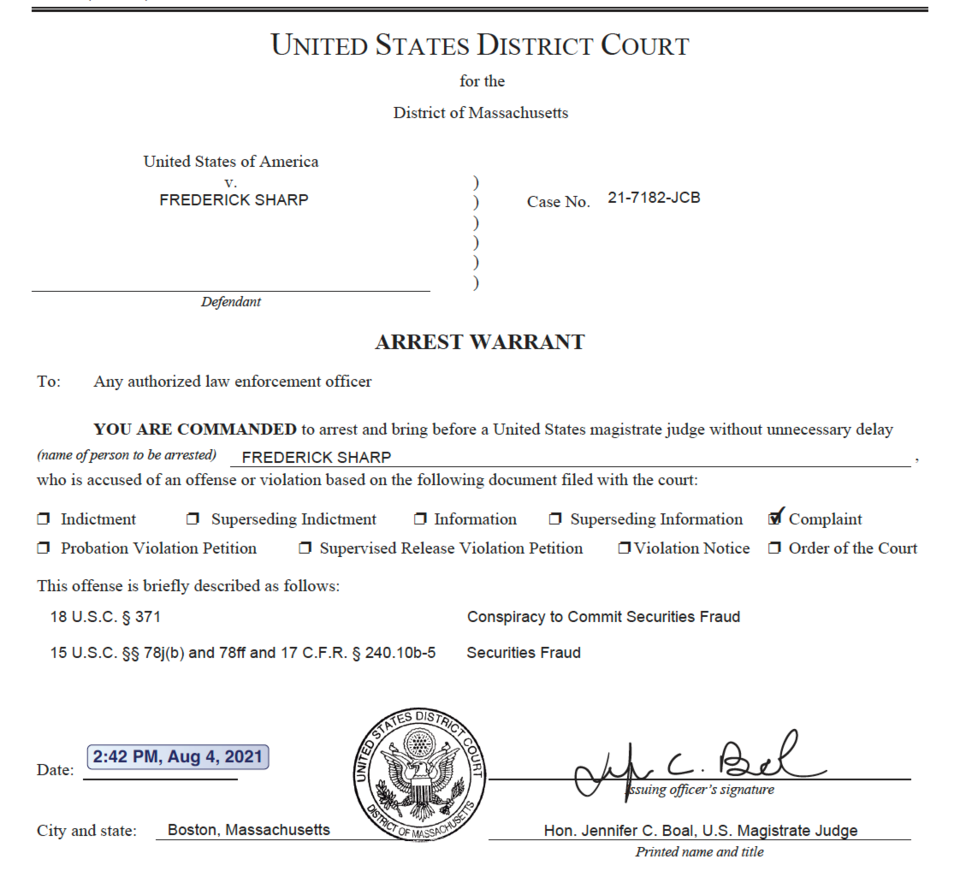
Transcript
This transcript was generated automatically and may contain errors — the audio is the record.
0:00:57 Thomas: Hello and welcome to opening arguments. This is episode 1156. I'm Thomas Smith. That over there is real life attorney Matt Cameron. How you doing?
0:01:04 Matt: I'm having a Thursday, you know, just not eating lunch, suing the government, stuff you do on Thursdays, having fun.
0:01:08 Thomas: That's my Thursday plan.
0:01:11 Matt: Well, not the first time, but you know if you ever want to see the government of Massachusetts, I'm sure I can help you out.
0:01:11 Thomas: You're actually suing the government? Oh, okay. Wow.
0:01:17 Matt: So what we have to do now in immigration cases, we can't just do regular immigration cases anymore. We have to sue to keep our clients in the state before they send them off to who knows where.
0:01:25 Thomas: Let's collaborate. I'll come eat lunch and you sue the government.
0:01:29 Matt: I can watch you eat. Somebody's got to do it.
0:01:29 Thomas: And then we've got a good, no, you know, we just gotta, you Yeah, we're each doing our part. We have two things that we have to do. I'll do one, you do the other. Seems fair. I don't know why you're making a big deal about this, man.
0:01:39 Matt: These are the things we can do. I appreciate your service. Thank you.
0:01:42 Thomas: Yeah, finally being recognized for what I can contribute. Oh, wow. Yeah, We got a lot of stuff to talk about today.
0:01:48 Thomas: Yeah, I don'T even know how to characterize it. It's just the stuff happening. It's Rapid Response Friday.
0:01:53 Matt: We do. Yeah, Yeah, it's happening quickly as always. We've got some great patron questions I want to be sure to get to. That's most of what we're doing here. I've got to say goodbye to an extremely unqualified district attorney for DC.
0:02:02 Thomas: Ed Martin, you mentioned him before, but he's out. It's amazing news.
0:02:06 Matt: We come not to praise Ed Martin's public career, but to bury it.
0:02:10 Thomas: I was wondering if you were going to save it for like an entire special because I know you love this guy.
0:02:14 Matt: It might be worth it at some point. We'll get to that. And I also want to talk about what Senator Chris Murphy has just called the greatest presidential corruption scandal in US history, which I know that's quite a competition. But when you look at the facts on this one, it is hard to miss and it's worse than I thought. So we're going to have to talk about crypto.
0:02:29 Thomas: Yeah, this is definitely one of those cases where flooding the zone has really worked for Trump. Like Trump is so corrupt. We're losing track and sight and perspective on how corrupt. So I'm glad we're talking about this.
0:02:41 Matt: You may still be stunned at how corrupt he actually is. And then we've got a Black Mirror footnote. We're having a little too much fun with the footnotes recently.
0:02:47 Thomas: Yeah, boo.
0:02:47 Matt: So we got to do some Black Mirror AI weirdness.
0:02:50 Thomas: Yeah, that's that's one we got to talk about because folks were commenting on it. And yeah, no, that'S a good way to summarize it. I haven't gotten to the new season of Black Mirror yet, but I imagine this is in it.
0:02:50 Matt: It's a big one.
0:02:59 Thomas: What if it is an elaborate like episode? Remember when Joaquin Phoenix did that terrible like Letterman stunt?
0:03:05 Matt: That's right.
0:03:05 Thomas: What if that's this, but for Black Mirror?
0:03:06 Matt: Yeah. Promo.
0:03:08 Thomas: It's in very poor taste. Can I just say?
0:03:10 Matt: That would be extremely dark, but that would be Black Mirror.
0:03:13 Thomas: We're talking about, of course, an AI appearance in court of someone beyond the grave. Not to spoil the whole thing, but just so folks know what we're joking about. Seems terrible and dumb, but we'll talk about it.
0:03:25 Matt: I have opinions for sure.
0:03:27 Thomas: Yeah. But I think probably our biggest single bummer of a news item is this SCOTUS decision. I guess it's, I never know, Matt. I never knew. It feels like it used to be more about, hey, Supreme Court made a decision. And now it's like, well, they have a ban of the unban of the temporary unban, ban shadow, unban.
0:03:43 Thomas: And I don't know what anything is anymore, Matt. That's why I listen to you. But they did a bad thing. That's what I know.
0:03:48 Matt: It's not permanent, but it doesn't look good for the trans military ban. So we'll have to talk about that.
0:03:52 Thomas: Yeah, not good news, but we'll get to the bottom of it. All right. Well, yeah, I think that's the agenda. Lots to talk about. So I suppose we'd better get to The Other Side of the Break. And if you'd like to avoid the ad break, of course, go to patreon .com slash law. Support what we're doing here and lose the ads. It's a win, win, Win. Don't even know who the third win is, but there's probably somebody.
0:04:14 Matt: We got some great patron questions and I really love it when patrons step up with these questions. So I thought I'd start off with one before we get into the trans -military ban. We follow up here from Yakko Warner about our ongoing conversation about administrative versus judicial warrants. And this is a really good question. And I hadn't really thought to answer it this way. So Yakko says, I've never seen a warrant and I don't know what to look for.
0:04:16 Thomas: Ooh, there you go. Yeah, very helpful. Hmm.
0:04:33 Matt: What should I look for? Am I allowed to photograph the warrant, the officer, to ask for ID to verify the identity of the officer? Will they be punished for entering the premises if they fake a judicial warrant? So there's a lot of questions here, but let's start with what a warrant actually looks like. And, uh, I'm going to send you a couple so you can see them for yourself.
0:04:46 Thomas: I decline. I don't know. This is too risky. I don't want to.
0:04:50 Matt: I'm serving you with a warrant right now, Thomas. So you have to comply
0:04:51 Thomas: Damn it. Not here. Thomas isn't here right now.
0:04:53 Matt: Because it's an administrative warrant. I have as much power as ICE to issue an administrative warrant pretty much. So I'm sending you one right now.
0:05:00 Thomas: Oh, wow. Yeah, you're right. You did say it was an inter -office memo. So I'm going to write my inter -OA memos in the form of warrants now. Matt, you are under arrest for sound quality issues.
0:05:04 Matt: Yeah, that's right. Command. And if I unplug that box one more time. So this is an ICE warrant that I've just sent you. It is, as you can see, one great way to find out where the warrant is coming from is right up top where it says U .S. Department of Homeland Security warrant for arrest of aliens. So, you know, already This is signed off on by an ICE officer, not a judge.
0:05:30 Matt: And it is addressed to any immigration officer authorized, et cetera, et cetera. And there's like a checklist of reasons that you might be getting a warrant. But notice the signature line at the bottom, who is responsible for the warrant.
0:05:39 Thomas: Do they always say sample in giant red lettering? I'm just. I never know with this government. Like, maybe be they do. I'm not entirely sure, but signature of authorized immigration off. That's cut off. Officer.
0:05:42 Matt: Only the really good ones. Yeah, presumably officer. So that's a tell right there that you're not looking at a judicial warrant because it's not signed by a judge and it's just a janky piece of paper. And as we were talking about before, this is just an arrest warrant for a public arrest that can't go to private places. They can't search your house. They can kick your door down. Not that they don't do those things sometimes, but if they get consent, if they can bully you into doing those things, then they can go in. But don't let them do that. Ask to see that warrant. Just for contrast, let's take a look at an actual federal judicial warrant. I will send you a picture of one of those.
0:06:17 Thomas: Hey, my legal situation is getting dicey at this point, folks. Send help. I've got two warrants out for my arrest. One, it seems to be meaningless. The other one's getting serious.
0:06:23 Matt: So this is a United States district court, and you can see right up top, this warrant is issued from a district court. This happens to be a Massachusetts one that I just found online. It's issued by a judge I was actually just in front of today. And it is commanding that that any law enforcement that has this warrant brings somebody in in front of the judge without delay. And it describes the actual offenses under which this person is charged, which include conspiracy to commit securities fraud and securities fraud.
0:06:42 Thomas: I thought we weren't going to talk about what I did. Oh, the example. It's an example. Yeah, just an example of it
0:06:54 Matt: This is a real guy, I guess. I won't say his name, but this is a really solid example of a federal arrest warrant.
0:06:59 Thomas: Looks more important.
0:07:00 Matt: Yes, much more important. Better fonts all around, better design. And most importantly, it is signed by an actual U .S. magistrate judge, federal judge. So that's what you really want to be looking for. So obviously, if somebody hands you one of those, you pretty much have to comply with whatever they need. But if somebody hands you an administrative warrant, you don't have to do anything. You can wish them a nice day or not. You Can just walk away. You don't Have to help them or tell them anything or whatever. That's just an important distinction, I think, just to see that visually.
0:07:26 Matt: To answer Yaka's question all around, though, I believe as a federal warrant, you're allowed to take a photograph of it. I wouldn't say that for the states. I'm not exactly sure. But you can certainly take a photo of an officer in a public place, federal officer. Now, that is, again, by state law. So I don't want to be careful about that. But generally speaking, you can. You might want to check your actual state law for that.
0:07:38 Thomas: Man, that's the kind would be like a freedom of, I don't know, something that we would have federally. I don' like the idea that some states can be like, we're passing the fascism. We want our cops to be unaccountable fascist law. I'm sure they have, but I don'T like that. They shouldn't be able to do that.
0:07:58 Matt: They shouldn't. And I just want to be careful just in case there is some state law, because I know it has been litigated here. Certainly, I mean, I know here it is legal and the same way that it's legal for you to take a picture of any public place of people in it, whatever's going on. And yes, you can ask for ID to verify the identity of the person, including name and badge, you know, if you ask for that on demand. So very important distinctions and make sure you know the difference. And it's always good to ask these questions. I know It's not always easy to do when somebody is wearing a uniform or in the case of ICE when they're wearing a full face mask as they come to arrest you. But those are your rights. Make sure you got them.
0:08:01 Thomas: There might be. Yeah. Yeah, good classic OA listener question. Well, patron question stuff. I like that, you
0:08:30 Matt: Thank you, Yakko Warner. Next question from Patron Melody. Two things. These are very different things. Could you cover the recent SCOTUS decision, allowing Trump's transgender military ban to go forward, and the reopening of Alcatraz for, among other criminals, judges specifically? Those are not yet related. I'll talk about them both real quick.
0:08:37 Thomas: Know. Oh, boy. Matt, I have to ask you if you saw the tweet that somebody said months ago, maybe, I don't even remember, years ago, months ago. Hey, I bet we could get Trump to reopen Alcatraz just by saying it's something he shouldn't do or something like that. And then somebody retweeted like, oh my God, put a moratorium on these kinds of things.
0:09:02 Matt: Well, and then of course there, there was somebody did put together and I have no idea if he was watching or not, but Escape from Alcatraz had been on that night, the night that he tweeted it in, in his local, down in Palm Beach. So yeah.
0:09:07 Thomas: Oh, I did see that as well. It's so silly. Yeah.
0:09:12 Matt: You know what, let's talk about Alcatrazz real quick. I'm just going to put this off for the trans military ban.
0:09:15 Thomas: Have you been to Alcatrazz, Matt? Yeah.
0:09:17 Matt: I've been to San Francisco. I got to look at it. I didn't go over to the ferry, but like a million people a year ago, you must've been.
0:09:19 Thomas: I might've gone in school. I actually can't remember. I remember we were gonna go, but I have no memory of actually being there. I have memory of like being around it. I think I was there. But anyway, point is, everyone knows this is silly. Is there like a major problem with people escaping prisons? I know it happens, but like it's this childish idea. They're like, oh yeah, we're going to reopen that. No one will get away. It's like, I don't know how many people are getting out of prisons. And is it really worth the most insane like home improvement project ever to try to revamp this damp? It's the whole thing's just wet. It's just damp and shitty and nothing. It's really hard to build anything on a damp, shitty island, and it's not worth anything except it actually brings in quite a bit of revenue as a museum. So that's about all it's good for.
0:10:06 Matt: A million people year I read. It's pretty good.
0:10:08 Thomas: Yeah. And none of them make it out.
0:10:10 Matt: They're all there.
0:10:11 Thomas: The only way they leave, Matt, is in a body bag.
0:10:13 Matt: I was going to say, maybe it's not that scary if you don't remember going there. I feel like most people would remember, but it was a long time ago.
0:10:17 Thomas: Yeah. Or it was so scary, the ghosts scared me. I feel like I win. I think they do a gimmick where they lock you in one of the things for a second. I feel Like they do that.
0:10:19 Matt: That's right. You blocked it out and you were scared straight. And here you are. No crimes. Well, inconveniently for Trump, the Bureau of Prisons doesn't own Alcatraz, as you were just saying. It's a tourist attraction. It's owned by the National Park Service, which is controlled by the Department of the Interior. And I was kind of maddening when I was looking for information about this because the news stories were like, well, they're going to have to battle out. I was like, that's not a battle. Congress gave it to the Department Of The Interior. I found the bill from 1972.
0:10:51 Matt: 1772, there's an act to establish the Golden Gate National Urban Recreation Area. It's not just Alcatraz, like 88 ,000 square feet of, or no, 88, 000 something. I don't know. Hold on.
0:10:59 Thomas: It might be. That could be square feet.
0:11:00 Matt: I think it's more than that. It is really large.
0:11:03 Thomas: Oh, well, that would include like the whole dealio.
0:11:06 Matt: Yeah, it's a lot. Yeah. In acres. I'm sorry. I forgot about acres. That's a unit. There we go.
0:11:09 Thomas: 82 ,000 acres?
0:11:12 Matt: Yeah it's huge.
0:11:12 Thomas: Wow, that is a lot. That's massive. So that's, yeah, so it's not, are they counting all the, like, the bay? Like, that's a lot of, it's a lotta acreage. I don't even know you had that much acreage there.
0:11:18 Matt: Yeah includes Muir Woods and the Presidio of San Francisco. So lots of other locations around the beautiful Golden Gate area there. I do remember it being especially beautiful around San Francisco and he's just just giving all that great real estate to federal prisoners. But yeah, no, this is just not possible. I mean, it's not owned by the Bureau of Prisons. And of course, the Bureau of Prison's director, William Marshall, being a Trump toady, comes out and says that they will vigorously pursue all avenues to support and implement the president's agenda. He's ordered an immediate assessment to determine our needs and the next steps.
0:11:24 Thomas: Yeah, that'S great. Yeah, it'S, itS, I love San Francisco. It's a really cool place. Shut up, dude. Our needs, yeah.
0:11:50 Matt: Our needs would be to get the land. Like, you need to actually have it.
0:11:52 Thomas: It's A Liability. It's like saying, it''s like when, uh, in Ghostbusters, when Ray buys the car, and he's like, shock, shock brake pads, steering wheel, you know, he goes through all the items, and And they're like, only $4 ,800, which back then would be a billion dollars for a used piece of shit car. It's like you would just be trying to acquire a liability, a complete liability. So stupid. World's best businessman, everybody.
0:12:13 Matt: It's a real fixer -upper. Yeah. I mean they closed it in 1963 because, from what I read, it was costing three times as much to operate as any other prison, starting with the fact you have to ferry people over to it. But yeah, at the most, it was holding 336 prisoners, which is less than 1 % of the whole prison population.
0:12:29 Thomas: But was it the worst of the worst, though?
0:12:32 Matt: So yeah, I don't know.
0:12:33 Thomas: I guess it probably was. I don't know.
0:12:35 Matt: Nicolas Cage was in there at some point, I guess. That's all I remember.
0:12:36 Thomas: Yeah. Yeah. He was just fizzing. He and Sean Connery. I think they broke into it.
0:12:39 Matt: Yeah, that's right. I haven't seen that movie in a long time.
0:12:42 Thomas: Don't know your history, huh? Okay. Read a book, man.
0:12:45 Matt: I'm not too concerned. This is one, it's an interesting pairing, actually. I don' t know if Melody meant to make this pairing, but these are both policies that were originally announced by presidential tweet, the trans -military ban and the Alcatraz reopening. And the Alcatraz reopening, opening, I just do not see it happening because it really would take an act of Congress and you're not just going to get a bunch of people decide to open it as a prison without an act of Congress.
0:13:04 Thomas: That's so stupid.
0:13:05 Matt: So yeah, no, just popping off, watching TV, hanging out, thinking about different ways to punish and torture people. It's really an occupation of Trump's these days, apparently. And I think he's steamed that there's been so much turmoil over the sea cot and he's looking for a place, you know, maybe that in the United States that's terrible that he can send people to. But I don't think that's going to happen. Maybe I shouldn't say that out loud, but I just don't see it. So let's talk about things that are happening. As I mentioned, the original trans -military ban was announced in a tweet in July 2017, very famously. I remember I was on vacation on Block Island and just saw this pop up on Twitter and I had to just stare at it for a while because this was not like a policy. It wasn't news. It was just the president tweeting that in like a terrible, like the guy didn't know how to thread at the time. I don't know, maybe he still doesn't, but it was just like these ellipses, like connecting these different sentences over different tweets. Our military must be focused on decisive and overwhelming victory and cannot be be burdened with tremendous medical costs, which of course are negligible, and disruption that transgender in the military would entail, period, thank you, no period. So weird with the thank yous. So that was the original sort of announcement. And then of course, the military had to scramble to figure out some way to actually implement this because nobody had, they did not want to do it at the time. This was something that Obama had lifted any ban in 2016. And there was plenty of reason to believe from what I'd read at the time that the military no problem with this, it wasn't costing that much. And of course you have many, many people serving with honor and only 0 .2 % of the the entire military has been diagnosed with gender dysphoria at all. So as in the general population, we're not talking about very many people, but we're talking about people that are serving. And this particular suit, now this is the second trans military ban. Now the first one did not apply to people who were already in the military. It was applying to people that were being recruited and actually signing up. So you couldn't, it was a ban on new members, but this one is much worse. So after 2017, they implement this ban. The Supreme Court upheld it at the time. It didn't make it any further. It never got to the full hearing, but Joe Biden promptly
0:13:30 Thomas: It yeah yeah yeah
0:14:52 Matt: Repealed the whole thing, as soon as he came in, obviously. And then Trump, of course, in his executive order of January 27th, it was of course like all of these entitled prioritizing military excellence and readiness. But of course this has nothing to do with military excellence and readiness, it's just hate speech. This whole thing is hate speech, I don't even want to read that much of it out loud. But it's got some really like openly transphobic stuff about men who think they're women or whatever, like just really totally out of touch with any kind of reality. And the difference of course, in this one is that it would actually remove people from the military who are trans. It's something called an involuntary separation, which it's a pretty serious stain on the record. I looked into what this is. I don't know that much about military law. And I saw one commentator saying that it's something that would usually be reserved for serious misconduct, something where you're just like really not meeting your standards. And that's how Pete Hegseth chose to use it to implement the ban.
0:15:33 Thomas: Geez I saw people talking about dishonorable discharges it's not sounds like it's not literally that though or is it that's close okay yeah
0:15:47 Matt: Well, it can deny you veterans benefits. So it's not literally that, but it's an an involuntary separation. That's what it goes down as. It's not good. But legally, it is different. But I mean, it amounts to the same thing. If you're talking about something that is only done to people that don't meet their standards and are actually committing misconduct, and denying veterans benefits is a huge thing, obviously.
0:16:03 Thomas: That's insane right when you think it can't be any more cruel like it'S not just banning people it'S NOT just kicking people out it'S doing so in a way that actively harms them for the rest of their lives
0:16:17 Matt: Yeah, no, it's terrible. And I mean the suit was filed by Emily Schilling, who's a 19 -year Navy vet. She sounds awesome. She was the first transgender person to get medical flight clearance for single -seat high -performance jets. And she's been very outspoken, very open in who she is and what she's been doing. Great advocate. So she's up front in this suit challenging this ban. And it is still, to be very clear, this suit is still happening. This is not the end of it. This ist just a shadow docket action. This I a one paragraph order in typical kind of how they do things now. But there were two different injunctions stopping this ban, both in Washington, one by Ana Reyes and one by Judge Benjamin Settle, who was a Bush appointee. His was particularly good. It's 65 pages and it really goes through, picks this thing apart, both the military ban and then the Hegseth policy implementing it. And he concludes here, Absent an injunction, all transgender service members are likely to suffer the irreparable harm of losing the military service they've chosen, while otherwise qualified accession plaintiffs will lose the opportunity to serve. Because the military has operated smoothly for four years under the Austin policy, the Biden repeal, any claimed hardship it may face in the meantime pales in comparison to the hardships imposed on transgender service numbers and otherwise qualified transgender accession candidates, tipping the balance of hardships sharply toward the plaintiffs. There can be few matters of greater public interest in this country than protecting the constitutional rights of its citizens. And again, this is a conservative George W. Bush appointee who sees what's going on here, that this is just hateful, and that the harm here, of course, whenever you're looking at an injunction, you have to look at irreparable harm.
0:16:28 Thomas: Likely wow yeah
0:17:40 Matt: And that was one of the patron questions about this, was how can you find that there's no irreparable harmful? People are going to lose their jobs, lose their careers, lose their benefits, right?
0:17:47 Thomas: Yeah you can't you have to be an idiot on purpose that's the only way yep
0:17:50 Matt: Yeah, no. Well, you have to just be transphobic. You have to actually just not like these people. I mean, that's really really what it comes down to.
0:17:53 Thomas: I think even if you even that shouldn't be enough like I doubt this like George W Bush judge is like super cool trans people I think you have to actively be an or actively be playing dumb to not recognize even if you didn't like trans people at all the obvious balance of harms is not toward the government that's been doing, that's just going to keep another day of the four years that they've had this current status quo. That's obviously not an irreparable harm versus people who are going to lose their military careers.
0:18:26 Matt: No. And of course, I mean, the irreparable harm is only one of the things you consider in the Denson test. But that also shows that because one of the things you're looking at is the likelihood of success and the merits. So that is very concerning that that probably is where they're going with this. Now, there are some good reasons just legally. And this is a 6 -3, just to be clear of this order. Obviously, the liberal justice has dissented and wouldn't have granted this reversal. But Chase Strangio, of course. He's one of the leading advocates for trans people in the country right now. Had a really good perspective perspective on this on his Instagram. I want to play a few seconds of it to give you his voice in this. I think it's important to hear from.
0:18:57 Thomas: First trans person to appear in front of the Supreme Court, right?
0:18:59 Matt: Yeah, very cool.
0:19:00 Thomas: Openly, I suppose we should add.
0:19:01 Matt: That's right. That's right. And I appreciated his perspective. This is very much kind of the place where I come from on these things of just trying to put things into the context of where it is. And there is a particular reason why this one came down the way it did and maybe other similar cases may not. So let's hear him explain it.
0:19:16 Clip: And letting it go into effect, the Supreme Court is legitimizing that type of animus from this administration, and it is scary to think what the administration will then do with that, so I wanna say I recognize this is catastrophic, first and foremost, for the thousands of people who are going to have their livelihood and work upended, and then also for the entire country that is now facing a rubber stamp on a certain form of animis from the federal executive. I also want to provide some additional legal context here so that we're not overextending what happened here into other contexts. There is an extraordinary amount of judicial deference to the executive when it comes to the military. And even when the military is acting transparently and facially discriminatory ways based on protected characteristics, the government has wider latitude under the court's precedent to act in facially discriminate ways. Ways. And so while this is an ominous sign generally, it does not suggest to me that the court is automatically telegraphing that, A, they're going to green light all forms of discrimination against trans people, though they may in other cases. That is not what this decision tells me. And the other thing to keep in mind is that there are all sorts of other questions that that come up in non-military contexts about how the courts deal with the government acting in discriminatory ways that we're still going to have to address. And so while I want us to be appropriately concerned about this decision and hold the pain of what it means for many people and what it suggests about the future, I also don't want to overly catastrophize about what it suggests, about other litigation that's currently pending both in the lower courts and before the United States Supreme Court, because the context of the military remains a unique one under Supreme Court constitutional jurisprudence. And so I just wanted to offer that as we're wrestling with all of the pain and uncertainty and fear of this moment.
0:21:28 Matt: I wanted to make sure we had a strong trans voice in there, somebody who's been following this issue like nobody else. And I appreciate the perspective. Obviously, it's very disappointing. It's hard to see, but I'm concerned we're going to be seeing the same thing when it comes to things like the foreign policy grounds for deportations or, you know, we've already seen with the TikTok ban, right, where the court just says we can't touch this because it's national security, it's natural trade, things we're not supposed to be touching. And this is one of those subjects. But the fact is that irreparable harm is going to begin very soon here because Pete Hexeth just announced just a few hours ago that he's going to start removing trans troops on June 6th if they don't leave voluntarily. So this is already in place. It's getting going. I hope that it gets a better shot when it gets up there because, you Know, at the same time, when they're deferring to the military, you think they could also defer to the many findings that this isn't really a burden in any way and that these people have served with honor. So I hope that gets a fair hearing and we'll be covering it when it actually gets to a full argument, but we're not there yet.
0:22:10 Thomas: So Chase is trying to say that this doesn't mean all trans rights are kind of gone according to the Supreme Supreme Court. It's just that in this area, the executive has kind of absolute power over this kind of decision. Is that what I did?
0:22:23 Matt: Right. Yeah, right.
0:22:29 Thomas: I understand Chase correctly.
0:22:30 Matt: Exactly. That's my understanding too, is when the military says this is what we have to do, the court does not want to get involved in military policy. Sure.
0:22:36 Thomas: Yeah, still insane. Still no way that the balance of harms and all that like that, that calculation is just a joke. Even if you thought even if you thought this was going to be successful, there's no great harm to like keeping the status quo for another however many days or weeks versus the obvious massive harm to trans people in the military. So still seems like a ridiculous decision to me.
0:22:56 Matt: It is. And we'll have to keep watching. Yeah.
0:22:58 Thomas: Okay, so we're going going to take a break and then we're going to talk about the most corrupt thing a president's ever done. Pretty much high bar. Right.
0:23:04 Matt: I think so. Very true. But also some good Democrat action to stop it.
0:23:08 Thomas: That's like looking at Wayne Gretzky in the hockey record books. You know, it's like, well, most corrupt things. Second only to, you know, there's Wayne Gretsky and then in fourth place, Wayne Getsky in third place, Wayne Ggetsky for like different season point totals and stuff. It's all Trump.
0:23:19 Matt: Warren Harding is whoever that fourth one is. Used to be the most corrupt.
0:23:24 Thomas: There'll be one other. Mario Lemieux has a few records, you Know, Nixon's in there too, somewhere, youknow, in that record book, but it's mostly Trump.
0:23:35 Thomas: All right. Well, Well, what did this asshole do this time?
0:23:37 Matt: Yeah I remember learning long ago when we talked about the presidents that Warren G. Harding and Ulysses S. Grant were the most corrupt presidents in U .S. history. But as you said, they're way down the hockey records now. Oh, man. Okay. So there's a report that just came out. Let's start here from State Democracy Defenders. This just came out and we're going to link to it. It's a great report. But they estimate, and this is hard to, you know, this is all very fluctuating and hard to get your hands around, but they estimate right now that cryptocurrency is about 40 % of Trump's net worth.
0:24:02 Matt: 40%. It's about $2 .9 billion that he's holding. He and his family, obviously. This is really bad because, of course, we talked about the Trump coin, which is a meme coin. And as the report points out, I wanted to read this because it's a very good summary. Dollar Trump is the name of the meme coin, there's also Dollar Melania. It has no apparent intrinsic value other than, as stated on the official Trump meme website, the ideals and beliefs embodied by the symbol Dollar Trump and the associated artwork.
0:24:28 Thomas: So nothing. So zero, zero value. Yeah. Yeah. That's zero. That's also zero. Yeah.
0:24:30 Matt: Nothing. Yeah, the idealsandbeliefsofDonaldTrump, yes, that's what you're paying for. That's negative. It actually costs money to have the ideals and beliefs. And officially, what you're buying are Trump meme cards. I don't know. I mean, obviously, I'm not going to hide it. I think most crypto is very stupid.
0:24:38 Thomas: Meaningless. They've recognized that. Well, it's not money. It's not like a currency, but they, so they call it a collectible. It's basically a collectable.
0:24:51 Matt: And the regulatory scheme that we're gonna be talking about, there was a proposal to make it a sort of more of a commodity than a security because, of course, none of this is regulated. Obviously, that's one of the things we have to talk about today is that this all came to a head this week because Trump and his family were so greedy that they actually tanked years of work that the cryptocurrency industry had put into spending $100 million in our election last year, $100 billion. And And the bill was just filibustered by the Democrats because they were so concerned about how Trump is benefiting from it. And if he had not been so flagrantly benefiting from It, we might have actually gotten some kind of regulation. Now, the regulation they were up for is called the Genius Act, the Guiding and Establishing National Innovation for U .S. Stablecoins Act. Now, this is pretty tepid stuff, but it was going to set up at least a market structure for stablecoins, which are the ones that are linked to something like the U. S. Dollar usually. And Trump, of course, also has a stablecoin. It's called Dollar USD1, and it's run by World Liberty Financial. Financial.
0:25:41 Matt: Now, the reason this really became news is, yeah, I don't get it.
0:25:41 Thomas: Why not just invest in dollars? Just do the dollars then. Seems like, you know. Yeah.
0:25:49 Matt: I will never understand it. Um, I'm not going to pretend I understand it, and in this case, when you hear about the details, there's only one reason that you're not using dollars, and that is so that you can give Donald Trump a lot of dollars, a whole lot of hours. Senator Chris Murphy came out and really did a great job of really framing this, got my attention, talking about how this is the greatest corruption scandal, you know, of any president, and, that he's put out his Venmo. That's what this is, is this is just a way to put money directly into the president's and his family's pockets. And the World Liberty Financial that runs the stablecoin, they get all the interest and transfer fees, right?
0:26:22 Matt: And there's a lot of money to be made on this stuff. So of course, a venture from Abu Dhabi, from the Emirates, came out. It's called MGX. And they put in $2 billion of this USD1. They took out $2 million and put it into Binance, the crypto exchange. Now, this is just a messy, messy web of corruption at this point, because Binance itself was already already prosecuted, and the head of Binance was convicted.
0:26:47 Thomas: This is not even Sam Bankman-Fried, right? Right? Because that was a whole different thing, right?
0:26:51 Matt: No.
0:26:51 Thomas: So I don't even know if I remember this.
0:26:52 Matt: Now, this is Changpeng Zhao. Now just coincidentally, after the initial coverage from Bloomberg and Wall Street Journal, it comes out that he was seeking a pardon while engaging in these crypto business deals involving the Trump family allies. The SEC already put a hold on the rest of the case, but he's a felon, and he had to pay a $50 million fine and go away for a bit. He was just released last September. And of course, it would be really good for him in finance if he could get a full pardon. That's just an open, and corrupt act to have a foreign government put in this money into a company that has already been prosecuted, the head is already a felon, and now is seeking a pardon after negotiating all the stuff that's making you so much money. Something like $80 million just from this transaction is estimated probably coming out to the Trump family.
0:27:17 Thomas: Hey, Matt, remember Hunter Biden? What did they think Hunter Biden was doing? What were they mad about?
0:27:36 Matt: Well, that was exponentially worse. I mean, he got a board seat on a Ukrainian gas company. I don't know how it gets worse than that. That's the worst thing you can do. So I don' t know where you'd bring that up.
0:27:48 Thomas: Yeah, you're right. Sorry. Silly me.
0:27:50 Matt: I had some thoughts lots about Hunter Biden as I was catching up on all of this. This is actually something that brought to the Democrats, even the Democrats who are bought and paid for by crypto, and there's about nine of them, brought them all to the point where they had to filibuster this because the Republicans, of course, are not going to simply add something to this bill that says the president and public officials can't hawk their own crypto. Because, you know, why would you want to add that to the law? Why would you wanna make that the actual thing? And of course Chris Murphy did actually introduce the Modern Emoluments and Malfeasance Enforcement Act, the Meme Act.
0:28:21 Matt: And And Democrat Sam Liccardo was introduced to the House. And all the Republicans had to do, as far as I understand it, would be to just agree that, yeah, let's just incorporate the idea that public officials and presidents, anybody else who's serving in public office, should not have the right to make a bunch of money selling crypto from their positions. Because remember, Trump was like openly pumping his own crypto. And he made a bunch OF money just posting about it while he was president.
0:28:44 Matt: He set up a Bitcoin reserve and digital asset strategic reserve. And his stuff went up like 18%.
0:28:48 Thomas: Oh, did that actually happen?
0:28:50 Matt: I think it has been set up. And so the idea actually, I mean, fundamentally, it's not a bad idea to have a place where all the Bitcoin that the government confiscates goes, because apparently it's kind of a mess, it was all over the place. But you know, there's also all kinds of problems with somebody who's heavily invested in crypto setting up a Bitcoin reserve and deciding which assets are going to get to go into the digital asset strategic reserve, right? So yeah, it just I don't have to explain the corruption. It's all there. But the industry, as I said, I've been pushing for years to get this basic regulation. It's not that much regulation, but it would create some real kind of legitimacy around the stablecoin and have basic market regulation, set up a basic market structure and allow sort of a licensing scheme for these things, like actually bring this out of the dark web and make it into something that's real. So the Genius Act was not all that controversial and Democrats mostly were for it until this all started to come out about just how corrupt it was getting and this thing with the $2 billion Middle Eastern deal on top of that. That, right? So there was a hearing that was scheduled this week that Maxine Waters was co -chairing, and she did what every Democrat should be doing right now when faced with something that is just this bad, this corrupt, and this openly fascist. So let's just listen to her in the hearing explaining what she's doing.
0:29:55 Clip: I object to this joint hearing because of the corruption of the president of the United United States and his ownership of crypto and his oversight of all the agencies. I object. The ranking members expressed concern about conflicts of interest, which is why she's disrupting today's joint hearing. Through her actions today, the ranking members thrown partisanship into what has historically been a strong, good, working bipartisan relationship. While I understand the ranking member has concerns, but by objecting to this hearing, the ranking number is undermining the opportunity for these two committees to to engage in a conversation of vital importance to the American people. Does the does the ranking member insist upon her objection? I insist upon my objection.
0:30:42 Clip: And I'd like everyone to join me in CDC room 217. The objection to convening this meeting is heard. Trump's crypto corruption. Mr. chairman, may I be heard on the objection?
0:30:40 Matt: That was Stephen Lynch from Massachusetts jumping in for a second, but the important part is what she just did, which is she said, I do not consent to this hearing. The hearing can't proceed as a joint hearing without the consent of both ranking members. And she said look, you have refused to address Trump's corruption. I'm walking out, I'm doing my own hearing next door if you guys want to come in.
0:31:10 Matt: And so she brought the witnesses that they were bringing. And again, the Trump family, just to repeat this, is estimated to have made about $350 million in crypto since January. And investors, by the way, in the meme coin have lost about $2 billion.
0:31:23 Thomas: So it's not all bad news.
0:31:23 Matt: That's right. A bunch of idiots also lost money. But yeah. And again, there's some really good ideas about regulating crypto here that should be done, even the weakest stuff, at least to be better than nothing. But we can't let it go forward when the president is allowed to make this kind of money and when any public official could do what he's doing right now. I mean, it's obscene. And the idea that it's partisan, that was killing me too. Because the reporting was all about this too.
0:31:45 Matt: There was a lot of very pro-crypto reporting. It was talking about how this was brought down by partisanship today. And if it's bipartisan to think that the president and public officials should not be directly making a bunch of money off of something they have control over, then I guess that's it. We're partisan. Yeah.
0:32:00 Thomas: Yep. Remember Hunter Biden, sorry I don't it's just I can't even what do you even say I wish we could start to get the message out somehow to the people who need to hear it I think there are just a lot of people who are not like hardcore maga but have really like the messaging of both parties are bad they're all saying like that has been effective fox news and the right-wing machine constantly trying to really just do the darvo just like whatever Trump's guilty of just try to paint Democrats is guilty of that and worse has really been effective. And I just wish we could sit people down and be like, what do you think Hunter Biden did? Okay.
0:32:33 Thomas: Now here's this obvious thing in the light of day, like not even, it's not even hidden. It's not, it is it's that's far more money, far more consequential happening right now out in the open. It is infuriating.
0:32:45 Matt: But You know, Biden crime family. But this is the definition of a foreign emolument. This is a president getting a bunch of money from foreign powers, also domestic, of course. There was a $20 million, quote unquote, investment in Trump coins from Freight Technology.
0:32:58 Thomas: That seems natural. That's a totally, they were going to do that anyway, though. Totally normal thing they would invest in.
0:33:02 Matt: It couldn't be because they want to talk about US-Mexico trade, right? Of course, they
0:33:05 Thomas: They just want to diversify their investments as in some that are are real and some that are fake. If you have real investments, you also want to have completely fake ones. So it's diversity.
0:33:15 Matt: See a good deal, obviously. I mean, even before all of this, you had Yugo Labs, which is a blockchain company. They donated $100,000 to Trump Inauguration Fund. The SEC immediately closed the investigation that they were doing into the company. Like, just straight up quid pro quo tit for tat this stuff is happening all over and it's pretty well known that you can just give money in this way just venmo him and your problems go away and the sec has been shutting down a lot of these crypto investigations so something to keep a watch on and of course you might have heard but he's promoting a gala dinner this is the thing that really put the Democrats over the top I think on may 22nd they're going to have a dinner for like something like 200 of the top meme coin holders where you can come and meet Trump and you get a private reception if you're in the top 25 they're sending out messages that are like you're so close come on, buy a little more.
0:33:56 Matt: You can come to the gala, right? I mean, this is from the president, from the President. It's just, I don't know. I don' t know what else to say. I mean if you don't think that's corruption, then you don't what corruption is.
0:34:04 Thomas: Okay, Matt. Well, I think we're mostly done with the dystopian suckage for the day. We got our recommended daily value there. So why don't we take a break? Then we can talk about more positive stuff like this absolute clown not getting the job he thought he was getting.
0:34:17 Matt: Something to celebrate.
0:34:21 Thomas: So Matt, remind us who, remind the very unfortunate souls who don't already know who Ed Martin is
0:34:26 Matt: Oh man, well who isn't Ed Martin really? I I mean he's really just such a paragon of public service. You might remember actually we, one of my favorite recent episodes, we talked to Michael Teeter of the 65 Project. He was just fresh off of filing a bar complaint against Ed Martin who who has been serving
0:34:40 Thomas: The sexy five project. What? Oh.
0:34:42 Matt: The 65 Project.
0:34:43 Thomas: 65. I genuinely was like what did you just say okay the sexy 5 project would be cooler they should have named it that
0:34:50 Matt: Let's get those people on. That sounds like fun. Yeah.
0:34:51 Thomas: Yeah, who are these five? Why are they so sexy? Let's study
0:34:55 Matt: Of course, the 65 project is generally filing bar complaints against people who deserve them with anything to do with election interference type stuff. And particularly though, this was the first one I think they'd filed under the new Trump administration, because this was, just to remind everybody where we're starting here, the serving US attorney, the acting US attorney for DC, very, very important US attorney. And this is the last time we talked about him. We were talking about him in the context of the fact that he had represented quite a few January 6th people, because he's very pro -January 6th, that is his overall position on it. And he specifically was representing somebody named Joseph Padilla in a criminal matter that was on appeal, and his name was still entered as Mr. Padilla's attorney. And then he went and filed the actual dismissal of his case, wall counsel record, as the US attorney. Of course, he had to do that on Trump's orders. But again, just as a basic ethical thing, you have somebody else do it. You recuse yourself from your actual client. So that's the kind of ethics we're talking about. Somebody doesn't understand something that simple, that you can't actually appear on both sides of a criminal case at the same time.
0:35:12 Thomas: Them yeah Wow oof
0:35:54 Matt: Yeah. So Martin is not very well liked in St. Louis, where he's from. I did see today that his hometown paper was very relieved that he will no longer be the US attorney. There's a long piece called The Ed Martin Show, which we'll link to in St Louis Magazine, which has all kinds of great lines about him, but generally pretty pretty well known to have what one person called a heart of coal. But he started out at 28. He's very Catholic. He started out as the head of human rights in the St. Louis Archdiocese. And this was not a good fit for him. The people were not happy with the way he handled this job. He complained a lot about the social justice stuff that the Catholics were doing and that they wanted to help strawberry pickers. He was very opposed to helping migrants. He is a right -wing troll. I mean, basically his entire career, he has been a right wing troll. He has thousands of hours of podcasts that have recently been pulled, mysteriously disappeared before the Senate was was supposed to be taking up his confirmation, they would have noticed there were at least five different appearances from a Nazi sympathizer that he was actually friends with named Timothy Hale Cusinelli. He appeared in an event not that long ago for January 6th people in which this man was also appearing. And he actually wears, just in case there's any question about what kind of Nazi this is,
0:36:27 Thomas: Jesus
0:36:57 Matt: Timothy Hale Kusinello is famous for wearing a Hitler-style mustache. Yeah.
0:36:57 Thomas: Oh My God. Oh my God I didn't have questions about what kind of Nazi this was Matt but I guess
0:37:07 Matt: It's the actual Hitler mustache
0:37:09 Thomas: I needed to come Come on.
0:37:09 Matt: Kind of Nazi. It's a very specific kind. Yeah just to try to do an apology to her. He did an interview with Forward Magazine recently, the Jewish magazine, where he said he was sorry that he had bestowed an award upon him at President Trump's golf club, among other things.
0:37:22 Thomas: Oh, my God. How could he have known?
0:37:24 Matt: Yeah. I denounce everything about what the guy said. Everything about the way he talked. Doesn't denounce his mustache, which is, you know, the most visually concerning thing. And I've now seen it. At the time, I didn't know it. Again, he's had him on his podcast, but I guess maybe they talked about golf or something.
0:37:37 Thomas: I just thought he was a big fan of Charlie Chaplin or something. I don't know. How do you? There's no way you didn't know, man.
0:37:44 Matt: We really dodged a bullet on this one. I mean, this again, the U .S. Attorney for D .C., I think, is probably second to U .S. attorney for SDNY in terms of the most important U .s. attorneys. Obviously, all of the federal stuff that happens in D .C. and prosecuting corruption, and obviously all the January 6th cases and everything else. But this guy is just a loose cannon. He's a hothead. He's got extreme views.
0:38:01 Thomas: A colossal piece of shit.
0:38:03 Matt: Absolutely. That's a much better way to put it. He, just to give you the idea, he was the RNC chair last year, as recently as last year. And his abortion stances are beyond anything that I've heard of one person holding. He is one of those people who opposes exceptions for rape and incest. He wants to imprison both abortion doctors and people who receive abortion. And he at one point claimed, here's a quote, it's an absolute scientific fact that no abortion is ever performed to save the life of the mother. Just never happened. So he's a scientist on top of everything else.
0:38:31 Thomas: That's not even a science. Like, if that were true, it wouldn't be a scientific fact. Sorry. I know the least of our worries, but, like, that's not a scientific fact.
0:38:42 Matt: But, you know, he's an extreme, extreme guy. And there's so much more I could tell you about him. But his support of January 6th and the January 6th defendants should have been disqualifying. And in fact, Tom Tillis from North Carolina found that it was. And this is the best news of the week, I think, is that pretty solid, very well -known Republicans, some, I guess at this point, the closest we have to a moderate, even though he has a pretty extreme right background, but he's got limits, it turns out. He actually has limits because he made it known that he was going to spike this nomination. He's up for, basically, he has to either get the job by May 20th or he has to go. The Senate has to make a decision here. Most recently came out that he had actually left off, very conveniently left off about 200 far right media appearances from his disclosure form ahead of his nomination.
0:39:00 Thomas: He also has a Hitler mustache, but you know, but he's a moderate.
0:39:26 Matt: Oh, it gets worse.
0:39:24 Thomas: 200. I don't even know if I have 200 media appearances of counting my podcasts. How would you leave them off?
0:39:30 Matt: Well, how many times have you been on Russian state media?
0:39:33 Thomas: None that I know of.
0:39:34 Matt: Working on zero? Yeah. Well Ed Martin, the Washington Post has found has been 150 times in different Russian state Media outlets.
0:39:41 Thomas: 150 times.
0:39:43 Matt: It's a lot. It is a lot of times between 2016 and 2024. And so the Washington post pointed that out and he's like, oh yeah, I meant to mention that he filed a supplement to include the Russian state appearances. This is somebody who's absolutely not fit for office.
0:39:54 Thomas: I just remembered the literal full -time job worth of time that I spent on Russian and Nazi channels. Whoops, forgot.
0:40:02 Matt: It's just so much fun. It was barely work at all.
0:40:03 Thomas: Yeah, exactly. I don't think of it as work. It's just my pleasure, really.
0:40:07 Matt: Speaking of Hunter Biden, there's also a Hillary Clinton angle here because he deleted a bunch of emails while he was working for the Board of Election Commissioners in St. Louis. That was kind of a disgrace early on in his career. Journalists are trying to get some of his emails and he just deleted them. Just not supposed to do that. So if you care about that kind of thing. But yeah, he was originally supposed to be the chief of staff for Office Office of Management and Budget. And then suddenly out of nowhere, Trump just kind of dropped that and made him interim US attorney for DC, which seems like a very different job.
0:40:32 Thomas: Jeez. Yeah. Yeah. That's a weird one.
0:40:35 Matt: But Trump was clearly looking for somebody who would prosecute anybody that Trump wanted to prosecute. And he is ready to do that. I think Trump is very reluctant to have to withdraw this nomination because he harassing in so many different ways. He was all about the retribution agenda and he was harassing everybody he could and making all kinds of threats. You might remember when Elon Musk was getting upset about things people were saying about him online and Martin jumped in and said he's going to find ways to prosecute people for saying things like it just, you know, this guy is the absolute avatar of the kind of thing that we've been talking about for so long about the lawyers who are necessary to carry out fascism. And the Republican Party in the form of Tom Tillis in the Judiciary Committee, finally found their line, they found a limit. And honestly, it's a good sign. It made me feel a lot better this week. I know there's a lot to be worried about. There's a lot of bad stuff happening. But if they can say, you Know what, we can't have this guy, this is too much. He can't be the US Attorney for DC, he doesn't belong, he's disqualified just for for the January 6th stuff. I don't know. It feels like an aberration, but I'll take it.
0:40:45 Thomas: I bet. Yeah, that's right. Yeah for criticizing Tesla and stuff. Something he's going to arrest people for.
0:41:34 Thomas: It's something. Yeah I mean I guess. So that makes a total of what like two people that have ever not you know.
0:41:41 Matt: Yeah. I mean, yeah.
0:41:41 Thomas: I guess they got rid of the signal gate guy right?
0:41:44 Matt: Well, isn't he just going to the UN?
0:41:45 Thomas: Oh yeah you're right. That doesn't even count. So it's Matt Gates and this guy is like the only two people we've successfully gotten rid of maybe.
0:41:50 Matt: Yeah, have anything resembling consequences. And who knows? Of course, I'm sure Ed Martin will go right back to his talk show and make plenty of money going on OAN or whatever.
0:41:54 Thomas: Yeah he's like fine more time for This is good, actually, because I was having a hard time squeezing in all my Nazi and Russian propaganda appearances. It's actually getting really hard just calendar wise to man, just just red lines of just like Nazi appearance, Nazi appearance. I'm glad finally free time pursue my passions.
0:42:08 Matt: But right, right. I might have to do a little bit more because I'd love to go back and find it. From what I read, his podcasts have mostly been scrubbed, but there's got to be some record out there somewhere. I'd like to find some best of, do some Ed Martin rundown.
0:42:26 Thomas: Well, and there's so many funny things like he's the threats that he's thrown out there, like while still having to sign is like interim assistant regional manager to the, you know, to the whatever. Like there's a lot of stuff like that. Like he's just the most pathetic loser fascist.
0:42:39 Matt: Well, now he's an unemployed, pathetic loser fascist pretty soon here. So if Trump doesn't nominate somebody else by the 20th, then actually the DC district court gets to do it.
0:42:47 Thomas: It'll probably be Marco Rubio.
0:42:49 Matt: Yeah. One more job. That's right.
0:42:49 Thomas: They just give him every job that, yeah, because they're like, well, he's the only person that people will vote for to confirm. So he's now the everything. He's the everything,
0:42:59 Matt: Well yeah. One More Fascist Down. More of that please. I don't think we're going to get more of that, but it's still good news and I'm taking it.
0:43:04 Thomas: Yeah. Yeah, we'll take it. Well, time for a footnote, a disturbing Black Mirror footnote. Hmm.
0:43:09 Matt: Yeah. Let's talk about something that has never happened before. We're in some very new territory. This is a patron question from Despairing Radical. This is about the AI victim statement is chilling and baffling to me. I'd really like to see a breakdown of how out of left field this is, and perhaps how likely this is to be thrown out on appeal. So this is a story out of Maricopa County, Arizona. This is a road rage case. The defendant was named Gabriel Arcostas, and he was facing seven to ten and a half years for manslaughter and endangerment. And Judge Todd Lang gave him the max after watching this video, among other things. Now, again, this sounds like it was a pretty extreme incident. This was a road range incident where the victim, Chris Pelkey, was killed for no reason, as happens in road rage. I don't want to make light of what happened to Mr. Pelkey. And it it sounds like from what I read about him, he's a good guy and his family really loved him. His family loved him enough that they recreated him in the form of an AI video to speak at the victim impact hearing. Now, this has never happened. Nothing like this has ever happened.
0:44:00 Thomas: How does this happen? What is this decision process? Because I just can't I can't fathom this. I can'T ever. I mean, I guess, you know, people are different, but I don't understand this, like making this decision as the family or whatever.
0:44:12 Matt: Well, it sounds, sounds like they had a lot of deliberation amongst the family and they decided that if they did it right, only if they said it right that they would think it was a good idea. But there was, there were some people who were at first very concerned about this and did not like the idea of resurrecting him this way. I saw that his sister and brother -in -law had a statement to NBC and they said, if it's not perfect, if he doesn't go out and really embody Body the spirit of Chris. I'm not going to let this be shown. And they decided that this did.
0:44:33 Matt: So let's hear a quick clip here of Chris Palke speaking at his own victim impact hearing.
0:44:39 Clip: Just to be clear for everyone seeing this, I am a version of Chris Pelkey, recreated through AI that uses my picture and my voice profile.
0:44:41 Thomas: Oh, God, it's terrible. Oh my God. I'm sorry. I thought it at least was like the newer fancy kind of AI video. Oh my God, you can't. No, it's just a picture. Where he's like they're getting like his slight face movements with the talking but every other part of him is still that is so disturbing so I already know like if you're trying to see it has to be perfect no cancel it back to the drawing board this is not
0:44:57 Matt: His mouth is moving. Yeah, yeah.
0:45:11 Clip: I was able to be digitally regenerated to share with you today. But here is insight into who I actually was in real life. Take a look. Hi, I'm Chris Pelky. I served with the United States Army in the infantry.
0:45:23 Thomas: It that doesn't sound like the other thing at all
0:45:26 Clip: I'm from upstate New York. And what else?
0:45:29 Thomas: So that's the real him
0:45:31 Clip: Where did I deploy? I went to Baghdad in 2006, 2008, and then I went to Afghanistan in 2009 to 2010. I think that I'm close with him and that he really is the
0:45:42 Thomas: So they switch to the this is the yeah like you said this is horrific and don't I'm not I don't actually mean this to make light of anything this is just just terrible though. Like, it's just like, you couldn't have done a worse version. I was assuming the best version of this. Like I was assuming, well, they've got the really good video AI now they can actually do what I assumed this was like a really realistic version of this, which still would be disturbing and I wouldn't do it. But like to do the like D plus version of it is just, I can't think of anything more sad. It's just weird.
0:46:12 Matt: Yeah, it's really unfortunate. It's also, well, you could play a little bit. You could skip ahead maybe a little but here a little more of the voice, yeah?
0:46:17 Thomas: Sure. Yeah. Is there more? So that's just him talking.
0:46:20 Matt: Yeah, he goes on.
0:46:21 Thomas: So, so this is real. So then this is the thing you wanted to play just play that you don't need a ai like game show host to introduce the real footage just do the real foot that's something I'm sure they've done before right yeah
0:46:34 Matt: Video exists of this man talking. Exactly, right. And we'll talk about that.
0:46:36 Thomas: And and this is very obviously this person isn't like testifying as a witness this is just a victim statement as you mentioned so it's but it's like okay we'll play a little more do I should I try to skip to like the ai guy again okay here I'll
0:46:47 Clip: Only answer to every problem. People that are sober and trying to live that good life, you know, so, you know it's just all about God and all about people. So as you can see from my video I recorded in 2021, this here is a true representation representation of who I was, you know, not how the courtroom portrayed me. So I would like to make my own impact statement.
0:46:47 Matt: Yes. Yeah, skip ahead.
0:46:58 Thomas: Just let's back to the ai that the the audio okay do you hear how how it's like muting very obviously and then unmuting that's not me or my audio setup that's that's how they did it god
0:47:22 Clip: So hello, everybody. Thank you so much for being here today. It means a lot. I can't tell you how humbled I am for those that spoke up for me, everyone who flew in, took off work, those who are watching this remotely and for everyone who has supported my family and loved ones through three and a half years and two trials I wish I could be with you all today to your honor judge lang thank you for making yourself available to see this case to the end especially when the rescheduled trial conflicted with your daughter's spring break thank you for listening to everyone today thank you for reading the flood of impact statements that came in before today that so many people wrote on my behalf. Every single one of them is meaningful and gives a glimpse into my life with each of them. To Gabriel Horkositas, the man who shot me, it is a shame we encountered each other that day in those circumstances. In another life we probably could have been friends. I believe in forgiveness and in God.
0:48:17 Thomas: Come on I hate this so much I can't right that's as much as I can take man
0:48:31 Matt: I know. And that last part is important because the family said this is how he was, that they believed that he would have forgiven the man, and they wanted to have the judge hear that.
0:48:39 Thomas: Just say that one of you that's his family but that's normally what they do just do
0:48:45 Matt: I will say too, after seeing this, the judge still gave the maximum sentence when the AI was asking for leniency. So I don't know how much sway this actually had, but I want to talk a little bit about this in the context to answer the question about the context of victim impact statements, because this is a very new direction, obviously. Obviously. But victim and corrective statements, as you said, they're a unique place in criminal justice because they're not testimony exactly. They're not from a witness. At the end of the trial when you've already been convicted and you're facing sentencing and the judge is just trying to decide what the appropriate sentence is going to be.
0:49:14 Matt: This has been an evolving movement for a long time with victims' rights. We talked about it a bit in the context of Adnan Saeed and how the victim impact statement ended up completely reversing that conviction because there was really advanced law on that in Maryland. But generally speaking, the Supreme Court did not support this, did not think this was a good idea, should not be admissible, especially in capital cases.
0:49:31 Thomas: That yeah Sorry, just to make sure you're talking about just victim impact statements in general like any of it? Oh, okay, so not not even this AI monstrosity, just in general
0:49:39 Matt: I'd be very interested to know what William Rehnquist would think about this. Maybe we can bring him back and have him tell us.
0:49:45 Thomas: I'm glad it's good he's dead he doesn't have to see
0:49:48 Matt: But in Payne v. Tennessee in 1991, they reversed the previous precedent in Booth and Gathers. Because previously, they found it was inadmissible, especially in capital cases. It's an Eighth Amendment issue because you can allow all kinds of stuff to come in in these hearings. I mean, you can have the victim's mother sit there and say he's a monster and he should die, right? I mean like the stuff that you would never have said at a trial. But But they generally found that it doesn't violate the Eighth Amendment because it's important to be able to bring this stuff in. It's not testimony. And it helps the person, the jury or the judge when they're deciding sentencing to see the whole picture. Justice O 'Connor and her concurrence, I went back and looked at, had some good language about how it provides a quick glimpse of the life the defendant chose to extinguish, reminding the sentencer that the person whose life was taken was a unique human being. And it is important to bring out who this person was when you're considering sentencing.
0:50:31 Thomas: Yeah yeah I just think if we looked at like the actual state of the entire system any objective look would not conclude that like you know we're not doing harsh enough punishments for people you know what we need is the ability for people to be even more emotionally charged in punishing people harsher it's just not something we
0:50:47 Matt: Exactly. I've always had complicated feelings about this because I want victims to be involved. But Justice Stevens, you know, I generally respect Justice Stevens very much, and he had a dissent in this. And he started out by saying, if a defendant who'd murdered a convenience store clerk in cold blood offered evidence about the immoral character of his victims, we'd recognize immediately the evidence was irrelevant and admissible. So he's saying that basically, to be even handed, we can't allow this kind of thing to come in this way, because it's just too prejudicial, right? Right.
0:50:51 Thomas: Need yeah yeah because you can't do the other way yeah
0:51:14 Matt: I mean, you can have mitigating circumstances, certainly when you're talking at sentencing about how maybe you have suffered abuse as a child or you have a mental issue or something. But I went looking for a Law Review article here from CUNY Law Review. They actually have an extensive footnote that I can drop in our footnote here about something pretty similar to this, about the kinds of things where you're showing video of the victim. You're bringing the victim into the hearing. Now, this is very different from actually reconstructing the victim, but just some examples, including a murdered police officer who's describing his job, talking about how much it means to him. A 90 -second video of the deceased playing the piano, something that he's just really good at. A three -minute videotape of the deceased on a camping trip. A 27 -minute video of the victim made just for the memorial service, featuring all these still photographs set to music.
0:51:55 Matt: Obviously, that was too much. They actually found that. That actually crossed the line. That was a Massachusetts federal court case, actually. There are lines. You can go too far. But something like wedding photos, home videos, the person giving a speech at a conference or something, you can generally bring that kind of stuff in. So as you said, we have video of the man. We know what he sounded like. It wasn't that long ago. And if you want to show a clip of him being an honorable person and talking about his life, then that's fine. But I have a real problem with this. I just can't get my head around it.
0:52:18 Thomas: This is awful in so many ways Nice. Yeah. Yeah,
0:52:22 Matt: I really don't like it. So I hope that we don't see this more often. I mean, it was reconstructed kind of the way that Black Mirror episode, if you remember, about the man who died and his wife tried to reconstruct him using all of his social media. It kind of reminded me of that because it's kind of what they did here and it didn't come out that well. Yeah.
0:52:35 Thomas: But again, even, I can't tell you how much I assumed we were doing the best version of this. This is pathetic. You might as well have taken a picture and just cut the mouth so that you can like, like a physical picture and then move the mouth up and down and then have someone do a voice behind it. That's what, that's what this is.
0:52:53 Matt: I did not think of those Quiznos guys that kind of came to mind. Almost that bad.
0:52:55 Thomas: Yeah it's, it's just insane. I don't understand how anyone could have thought this was a good idea. Cool.
0:53:00 Matt: The family did. And we have to respect their decision to want to put that in. And they say that what he's saying would have represented what he would have said. And I have to expect that too. But again, that's right. That's completely normal in a victim impact statement to
0:53:07 Thomas: Just write that down and someone someone read it. Yeah. Yeah, yeah.
0:53:12 Matt: Say my son never would have wanted to see this man suffer, whatever. But yeah, no, this is too much. AndI do hope that it does become an appellate issue.
0:53:20 Thomas: All right. Well, thanks for another good episode, Matt. Thanks for the breakdowns. Lots to keep in mind, lots to follow. A little bit of bad news, a little bit good news. But as always, the news hose goes on and Rapid Response Friday goes on. Thanks for that.
0:53:33 Matt: I'm going to go dry off.
0:53:35 Thomas: Thanks for listening, everyone. And thanks most of all to our patrons for making the show happen. And we'll see everyone on Monday.
0:53:41 Matt: All right. See you soon.
0:53:59 Thomas: Remember Hunter Biden?
0:54:01 Matt: The Sexy Five Project.
0:54:03 Thomas: Who are these five? Why are they so sexy? Let's study them.