
 Opening Arguments
OA538: The Rittenhouse Trial Instructions, Explained
Yet another packed episode! Our main story is what's really going on with the Rittenhouse Trial Instructions. You might have seen the coverage stating that the victims can't be called victims but can be called rioters and looters. Is reality as bad as the coverage? Andrew explains! Then in what is our co-main segment, Andrew gives us his initial thoughts on the hot off the presses Build Back Better Plan and what Sinema and Manchin have cost us.
Links: HCSM letter, Wisconsin Legislature: 940.02, Kyle Rittenhouse back in court today, https://ballotpedia.org/Bruce_Schroeder, Kyle Ritttenhouse trial: Judge Bruce Schroeder to preside, Rittenhouse judge in spotlight after disallowing word 'victims' in courtroom, BBB deal Page 1 Page 2 Page 3, Whitehouse.gov BBB, HR5376 - 117th Congress (2021-2022): Build Back Better Act
 Apple Podcasts
 Spotify
 iHeart
 Support on Patreon
Transcript
This transcript was generated automatically and may contain errors — the audio is the record.
0:01:17 Thomas: Hello and welcome to Opening Arguments. This is episode 538. Oh, okay. Well, we're 538 podcast now. Oh God, nevermind. We're not. We are not that.
0:01:25 Andrew: We will be right in 2008 and then wrong about everything afterwards.
0:01:33 Thomas: And have a bunch of political takes, like a pundit that aren't supported by the data, the journalism that we're supposed to be doing. Anyway, I'm Thomas.
0:01:42 Andrew: We're going to do the exact opposite in this show. So I
0:01:43 Thomas: Yeah, we are not going to do that. I'm Thomas. That's Andrew Torrez, legal expert extraordinaire. How are you doing? Back on dry dry land.
0:01:51 Andrew: Am fantastic. Yeah. You know, I can stand up without kind of listing to the left or right anymore. It's you good it's good thing. And I am super excited about not just today. Today's show is amazing. OK. As always, whenever, you know know, the president of the United States drops a major budget framework an hour before our record. So that that's always fun. Next week, we have a Trump free, nonpolitical, entirely hilarious show. And we're going to be covering Pablo Escobar's cocaine hippos. So, you know, I want you to tune in on Tuesday. I don't want you to just like, you know, hang up on this one. But but
0:02:04 Thomas: Yeah. Uh, it's the, we're
0:02:35 Andrew: Yeah, yeah,
0:02:36 Thomas: Finally getting to the day we started the show. Andrew, I told you, when are we going to get to the Pablo Escobar cocaine hippo episode of our show? I'm so glad it took us 539 episodes, but we're going to do it.
0:02:46 Andrew: We will get there. So I got I got that to look forward to.
0:02:50 Thomas: It was inevitable. We all, obviously we're going to a show called Pablo Escobar's cocaine. I don't even know what this is. That was the weirdest string of words that I cannot wait to hear about. That's going to be Tuesday's show. So, you know, that'll be a lot of fun. Today, we have so much to cover. I'm usually your hype man, Andrew, but it's such a good show. You are hype manning yourself. You're out there talking about how good the show is. We are going to talk about the Rittenhouse. The sort of instructions about, The Onion had a great parody piece. I don't if you saw that one that was like, Rittenhouse can only be referred to as hero during the trial or something like that.
And I have no idea. So here's the thing. I can't wait because right when I saw that and right when I saw Andrew was covering it, I thought I'm going to go ahead and not react until I hear Andrew's breakdown. And maybe it'll be even worse than we see online, or maybe it won't be. I don't know. That's why we hired a lawyer to tell us things on the show. So looking forward to that. Like you say, I'm sure you went all the way through the nine million page Build Back Better deal as we speak. I'm certain you read sped that in like an hour, right?
0:03:11 Andrew: Oh, yeah. Yeah.
0:03:54 Thomas: Gonna go through what of that, uh, you've gotten through. And first, uh, this is a good time to announce, Andrew, since you are off your boat, you're back on dry land, we will be back to delivering you the goodies. And the next thing we need to do is a Patreon Q&A live on YouTube for everybody to come watch, by the way, but only the patrons on patreon.com slash log get to ask the questions. Andrew will be posting that question thread as we speak, right, right now, definitely doing it so that we don't forget later. Uh, but that Q and a is going to be Tuesday, election day, Virginia governorship election day. Very important. So we can talk about that Tuesday. That's November 2nd at four West Coast time, seven East Coast time.
0:04:41 Thomas: So four slash seven. That is when we are going to be doing it. Join us on YouTube. We will throw out the links, check our social media. Uh of course, Patreon. We'll throw it up on Patreon so you get the notification, but all our patrons can ask questions. Everybody can come watch and engage in the chat. It's been too long. I'm so glad we're back to it. Can't wait.
0:04:59 Andrew: Yep, me too.
0:05:00 Thomas: And uh, let's do some updates in the first segment here, uh,
0:05:03 Andrew: Yeah. One, very, very quickly, this is exactly what, uh, you and I discussed, uh, primarily on the, uh, delightful Washington Post, um, Slack or whatever, the whatever that
0:05:16 Thomas: So That was A stream we did, you can find it on YouTube.
0:05:16 Andrew: Um, No. No.
0:05:19 Thomas: I put the link in the show notes the last few episodes, that was Called the Washington Post Story Mode, uh, this Cool name for their, it's like WaPo StoMo.
0:05:22 Andrew: Oh. WaPoStoMo. I remember. Yeah.
0:05:29 Thomas: It's their, it's their stream, stream that is like video game focused usually. And so Andrew and I were both on, uh, due to some clerical error they had me on, but I was like, I don't know if I'm not a lawyer. Uh, I was just another one of them. I was Like, I, I that's all I do is the things you're trying to do now asking Andrew questions, but, uh I got, I snuck them in. I got some good questions in. So I'm sure you can still watch that, uh on YouTube if you'd like on the link that I provided in show notes. And thanks so much for inviting us. That was a ton of fun. And it actually provided, you know, it's largely stuff you heard on the show, but, you know, a little bit more context and questions around the Activision stuff. So go check that out if you'd like.
0:05:38 Andrew: You Were you Were great, yeah. I Yeah. And near the end of that, we discussed how Activision had filed a motion to stay the proceedings in the state court, the California DEFA proceedings that remain open against it. And, you know, we said under ordinary conditions, it would be a no brainer to deny that motion to stay. But that, you know, things were kind of thrown up into the air because of the spat between the state agency and the federal EEOC. And two days ago, the judge in the state proceedings, without, a you know, with no written explanation, just summarily denied Activision's motion to stay. So we don't know why. But, you know, again, that's exactly what you would expect in normal litigation.
0:06:57 Andrew: And to the extent that you're looking into the tea leaves, I mean, I it suggests that, you know, that judge is is not going to be distracted by, you know, the the inter fraternal warfare between two government. And let's hope that that's the case, right? Like, that's what you that would be the right result. So cautiously optimistic. Good result. No stay in Activision. Second update. I'm really, really excited to share this with you, Thomas. In the show notes. Congressman Jared Huffman and three other co-signatories a letter to the Federal Trade Commission that the Consumer Protection Division and that letter is the direct result of the testimony that I gave. So really, I want to thank Congressman Huffman. I want to thank his legislative aide, Anthony Montoya, and also a special shout out to Andrew Seidel who made that introduction and really got the ball rolling.
0:07:11 Thomas: Yeah.
0:07:59 Andrew: That was the Congressional Free Thought Caucus. I was sort of limited in what I could say. I wasn't trying to be overly cagey. If you read the letter, will you note some, you opening arguments inspired language.
0:08:11 Thomas: He's like, put a pin in this.
0:08:14 Andrew: Well, you know, HCSMs deceptively market their coverage as comprehensive.
0:08:18 Thomas: And they're a real Clown horn, right? And
0:08:21 Andrew: Some health shares even use naming devices to describe their health plans that are similar to the metal tiers on the ACA exchanges, gold, silver and bronze. Right. You might recall me walking you through that. And I walked the the committee through that as well. It emphasizes sort of the key talking points that we went over in the episode. And then it asks the FTC five questions. And, you know, this is this is really how the stage gets set for deciding whether you need to take legislative action. Right. Right. You say, all right, what can an executive agency do about this, given the existing law? Is that going to be sufficient? What what are their answers to our questions look like? And so, know, this is not even a sternly I mean, it is it is stern towards Christian health chair ministries, but not, you know, towards you the FTC.
0:09:12 Andrew: It is it is truly inquisitive. Hey, what are you going to do? So those questions are, one, what actions can the FTC take to protect consumers from enrolling in health coverage that does not cover medically necessary tests and services? Two, what action has FTC previously taken to investigate, prosecute, cite, find, or otherwise address the behavior of HCSMs? Has the FTC previously determined if the business practices of HCSMs constitute consumer fraud? Fraud? Three, what enforcement actions has the FTC previously taken against deceptive marketing in health care coverage? And how do those cases apply to marketing done by HCSMs? Four, how many complaints, I love this question, has the FTC received to date regarding the marketing or business practices of HCSMs?
0:09:59 Andrew: What are the general contents of those complaints? And number five, what steps can the FTC take to ensure that HCSMs must publicly display their terms and conditions So that consumers understand the extent of their coverage. Will this include a clearly written explanation of benefits as certified insurance products must provide? So
0:10:18 Thomas: Then It closes with, "I thanks, Your Honor, I rest my case." You rest your case. What? Oh, I thought that was just, and it just goes through the whole thing. I think that's How cool, that's all You know, yeah.
0:10:21 Andrew: Case closed. Nosed. Yeah, exactly. It's it's very odd that the letter thanks patrons for, you know, seven pages at the end. But, you Know, no. Anthony Montoya did independent research as well that supplemented some of the information that I provided. So I'm not saying I wrote this letter, that would be way too much credit, it. But but I do want to say that that the particularly the stories that that listeners sent in were salient and were the subject of questions by Representative Huffman, by Representative Jamie Raskin, who signed on to this letter and asked me six or seven questions at the end. You're a show listener, you really did help make this possible. And, you we're just at the beginning. So I'm very, very excited about that. And obviously we'll continue to track what the FTC's response is.
0:10:36 Thomas: And Excellent, that's so cool, I can't wait, I hope they pull a Washington Post and invite me for some reason too, too.
0:11:28 Thomas: Yeah, Andrew and I could start asking questions of you from the from the, you know, from the table.
0:11:33 Andrew: That would be that would be amazing. It just like nudge, you know, Eleanor Holmes Norton out of the way and be like, oh, gosh, that'd be so much fun. All
0:11:44 Clip: Down the law, down the law.
0:11:48 Thomas: Now on to not as fun topics, Andrew. Oh, my God. I just cannot wait to hear your breakdown. What is going on? It seems I'm seeing so much stuff spread online about Rittenhouse and the instructions during the trial, seeing stories like "judge rules prosecutor not allowed to describe the men shot by Rittenhouse as victims." I, you know, I've seeing some other stuff that they, they can be called rioters and looters but not victim. It just sounds like a mess. I is this every bit as bad as as it seems, or what's the lawyer explanation for what's going on here? Oh
0:12:20 Andrew: It it certainly does look bad. And it has been the subject of outrage in left wing media circles, including mostly misleading coverage on MSNBC. I'm sad to say. I want to tell you almost everything you've read and heard about this is wrong. It Is not to suggest that we don't need to scrutinize the judge in the case. We do. I'm going to talk about that. But it didn't happen the way that this is being portrayed. Trade So, um, I'm gonna walk you through all of it, but the top line before I get into it is it is 100% appropriate. I talked to seven lawyers, three former prosecutors, four defense attorneys, one of whom is a public defender, okay. Every single one of them confirmed to me that, uh in a murder case, and and by the way, uh this is, a there's a homicide case, this is reckless homicide, not a not a murder case. But that in murder trials where where the defendant is presumed innocent until proven guilty, refer to the victim in that case as the decedent, that that is absolutely standard practice.
0:12:39 Thomas: My gosh. It's
0:13:34 Andrew: Particular, I'm going to break down, you're going to see it is in particular standard practice from this judge. So we're going get to that. We're in the context of the, what about the rioters and looters and all of that. Let me unpack and tell you the story. First, the legal background. As I alluded to, Kyle Rittenhouse, the top line offense with which he is charged is first degree reckless homicide. Side That's Wisconsin statute 940.02, subsection 1, which says, "whoever recklessly causes the death of another human being under circumstances which show utter disregard for human life is guilty of a class B felony." And remember, Rittenhouse's argument is self-defense here. So it is not difficult to imagine, and I want to sort of start with this, take a much more typical case, you, African-American defendant accused of murdering a cop, and the defendant's defense is self-defense.
0:14:28 Andrew: Right. You would absolutely be up in arms if the prosecution was able to refer to that cop as the victim throughout the trial. Right. You would be saying, well, wait, we don't know that the cop is a victim yet. Like know, the kid is saying he shot him in self-defense. Now, look, I don't have any sympathy for Kyle Rittenhouse.
0:14:38 Thomas: Yeah. Or I Mean Just something Even simpler, like a home break-in where, let's say, or or like a abusive husband or something is shot by a Spouse in self-defense, you Imagine the whole, whole trial, they're like, no, we're referring to the husband as the victim, that That Would be pretty prejudicial.
0:14:53 Andrew: Yep. Right. Right, right. It absolutely would be And right. Again, that is not to say. Right. I mean, I think we all know where all of us come out on Kyle Ritenhouse.
0:15:09 Thomas: Yeah. We Should Make That Absolutely Clear
0:15:10 Andrew: Yeah. But you're
0:15:10 Thomas: But it's The way That the justice system works is you can't, no Matter how much we all want a certain outcome in this trial with Kyle Rittenhouse, you are presumed innocent until proven guilty, and As much I am the negatron Of the show, I do think that's actually still a good thing in our legal system, yeah.
0:15:14 Andrew: Entitled. And a good thing. Yeah. So this hearing on Monday were the final motions in limine leading up to the actual trial issue, by the way, was not the question of can the prosecution refer to the victims as victims. Right. That was actually ruled on days earlier and was, as I suggested, totally noncontroversial. What was at issue on Monday, among several other things that I'm to get to, was that defense. Well, the prosecution moved in limine to prohibit the defense from referring to the victims as rioters, arsonists and looters. That's Right. How this came about. And by the way, the prosecutor partially won that motion that that's also not being reported.
0:16:17 Andrew: So Right. This is assistant district attorney Thomas Binger. And he said, look, defense has indicated that in their opening statement, they're going to call the people that Kyle Rittenhouse shot rioters, arsonists and looters. And your honor, I want an instruction telling them that they can't do that. And the judge said, for exactly the same reason, you're right, I'm not going to allow them to refer to those individuals as such in opening statements because it hasn't been proven. But then and I listened to the actual hearing. He said, quote, let the evidence as the trial commences, let the evident show what the evidence shows. And if the evidence show that any or more than one of these people were engaged in arson, rioting or looting, then I'm not going to tell the defense.
0:17:04 Andrew: They can't call them that. And so in closing arguments. Right. Right. And and then the judge said and this quote has kind of been taken out of context a little bit. Basically, like and by the way, D.A. you Binger, I don't think they're going to because this would be a really stupid strategy. Right. What the judge says was he can demonize them if he wants, if he thinks it will win points with the jury. Right.
0:17:27 Andrew: And and and that's just a way of a, 75 year old judge who's presided over an awful lot of criminal trials, including high profile murder and homicide cases, saying it would be kind of weird to to spend your closing arguments demonizing the victims here. But, hey, if he's going to do that and he's proven that they were arsonist rioters and looters, I'm not going to exclude that right now in limine. So, by the way, you may see this motion renewed based on, you what actually comes out during the trial. Keep an eye on. But atthe moment that that was denied, it it prompted a really, really good lawyerly argument from Binger. And Right. He said, Your Honor, this seems to me like a double standard. He said, quote, If I were to count the number of times that you've admonished me not to call someone a victim during a trial, it would be in the thousands. Right? And remember, right, he's the assistant
0:17:26 Thomas: Good Point Right. Right.
0:18:20 Andrew: District attorney. Yeah, he practices in front of this judge all the time. Right. He's like the terms that I'm identifying here, such as rioters, looters, arsonists are as loaded, if not more loaded than the term victim. Right. So good lawyerly argument that says, hey, if I can't call them a victim, they shouldn't be able to call them rioters looters arsonist. And that's when the judge said, no, that's not I reject that comparison. Comparison. The word victim is a loaded, loaded word that got, covered in the press, that sort of thing. Really, that would have been a good time to say the question is, you know, what level of proof comes out throughout the trial as to whether they were actually involved in these things. Instead, the judge was just like, yeah, I get it. Nice try. But But I don't think this is a double standard. Victim is out because victim is always out. And riot or loot or arsonist can be in if that's proven at the trial. Would I have preferred it?
0:18:21 Thomas: Yeah. Oh.
0:19:17 Andrew: Sure, I would have preferred a ruling the other way. But I think once you understand that, all of a sudden now the stories kind of fit into a pattern that makes some more sense. I want to talk about something that was also a part of the of the motion in limine that has not been covered anywhere, because I find this very, very puzzling. And it has to do with the video, the Facebook video that, you know, I might call the the we appreciate you or the water bottle video. Right. That shows the cops throwing water bottles to Kyle Rittenhouse and saying, hey, we appreciate your guys.
The prosecutor, Binger, moved in limine to exclude that video in its entirety. He gave this justification. He said, I'm concerned that this is going to be turned into a trial over what law enforcement should or shouldn't have done that night. And I don't think that's what this court or this trial should be deciding. Now, that's interesting, right? Again, he's a career prosecutor of crimes like this. I'm a civil lawyer who talks into a microphone. So maybe his judgment is way better than mine. But I would think that being able to show that video would be relevant to proving the elements of the reckless homicide, right?
0:19:50 Thomas: Yeah.
0:20:36 Andrew: Because, remember, you have to showthat he had circumstances which show utter disregard for human life. Well, one of the ways in which you might show his utter disregard for human life is if everyone around him is sort of, you know, egging him on and saying, oh, yeah, good thing you're here to, you know, help us clean up the streets. I don't know.
0:20:56 Thomas: I don't know. I think I maybe see the logic here. And again, there's no disputing that he killed two people, injured a third. That's obviously not up for debate. It's just a typical, like, well, was it a self-defense thing or was it not, know, not. And I wonder if the prosecutor is thinking, I don't want that video where the police are kind of siding with it. Like, I do not want to make him seem like he is on the side of justice, you know, because that might make you feel like it is more of a self-defense thing if you a juror.
0:21:24 Andrew: Yeah. Interestingly enough, your ruling is rather similar to what Judge Schroeder said. He said, I'm not going to allow you to admit the video for the substance of it. Right. Here was his ruling quote. I would not let it that the video be used to prove that the entire police presence on that evening appreciated Mr. Rittenhouse's behavior or his presence. Relevance is another matter. If police tell him it's a good thing you people are here, given the state of lawlessness that's existing, is that something that's influencing the defendant and emboldening him in his behavior? That would seem to me to be an argument for relevance. Right. So, yeah, you can use that to probe into Rittenhouse's mindset, but you can't use it to say the police approved of his actions.
0:22:17 Andrew: I decided I would pull up everything I could find about this judge, Bruce Schroeder, right, to just try and figure out, you know, because this is kind of ambiguous, and I would like to know, right, like, does does he have this thumb on the scale one way or the other? And again, you know, notice, uh, particularly among, you know, sort of our left, uh, our left-leaning audience. Right. Like, all all cops are bastards and all all prosecutors are cops up until it's, you know, somebody you actually want prosecuted. Schroeder was appointed by a Democratic governor in 1983. He's he's 75. Right. So, yes, obviously, on the one hand.
0:22:07 Thomas: Okay. Hmm. Okay, So, he is a spry young judge compared to all the other other ones. Yeah.
0:22:58 Andrew: Yeah, right. You know, you'd love this to be in the hands of, you know, a 30 year old African-American woman. In the hands of an old white guy. That's a that's a minus. But appointed by a Democratic governor in in 83, he was then elected in 84, reelected in 2014, ran unopposed. His term expires 2026. In reading local Wisconsin newspapers, best that I can find is I'm going to share a couple of these. He he's he's referred to as no nonsense. And there's a sense that he is kind of pro prosecution. So I'm going to walk through both of those. And I've got the links that, you know, put in the show notes. But this is from the Wisconsin Tribune. Schroeder's no nonsense reputation is well known among criminal defense attorneys. He's not intimidated by the spectacle and the media involvement in this case or the high stakes. He is essentially denied almost every pretrial motion by both sides and really focusing the parties on what happened the night of the shooting.
0:23:10 Thomas: Wow.
0:24:00 Andrew: That came from local criminal defense attorney Dan Adams. Prior to the Rittenhouse trial, the most high profile trial that Judge Schroeder had was the Mark Jensen homicide trial in 2008. In that case, it turned up. There was a letter from Jensen was accused of poisoning his wife with antifreeze. And there was a newsletter secreted away that was discovered. I mean, this is such a great, lot awful movie. Right. That said, if anything ever happens to me and I turn up dead, my husband should be the first suspect. Yeah.
0:24:34 Thomas: Jeez.
0:24:35 Andrew: Right. And the question was, do you admit that letter into evidence? Right. And the argument against it is confrontation clause. Right, is to say, yeah, the person who wrote it is now dead and you'll never be able to cross examine them, provide any context whatsoever. It's obviously supremely prejudicial. Schroeder let it in. He it got overturned on appeal, but then reversed at the Supreme Court. So ultimately, his view is his pro prosecutorial view was was validated by the Supreme court.
0:24:35 Thomas: Yeah. Huh. So, He's a judge that we wouldn't be a fan of in any other context until there's somebody we want prosecuted. Yeah.
0:25:11 Andrew: Yeah, I think that's right.
0:25:18 Thomas: And sometimes, you're on the prosecution side. No.
0:25:20 Andrew: That's right. So he has overseen hundreds of trials. Additional stuff that might factor into your decision. He had a trial in the 1980s in which he ordered a convicted child molester who was also a sex worker, uh, compelled, uh, that person to get an AIDS test, and the basis of the ruling was you have the ability, quote, "to carry death into people's homes." Um, that's obviously not super woke and not great, but, like, you know, 1985, it is very, very typical of of politicians of both parties in 1985. Again, I say that not to excuse that. I think everyone knows where we stand on this show. In this case, in addition to, talked about some of the motions in Lumine, a defense request to be able to show that one of the victims, and I have no idea who this is.
0:26:17 Andrew: Don't care. This seems super gross. That one of them was a convicted pedophile. No idea if that is true. That is the kind of thing. Yeah.
0:26:25 Thomas: I remember that being a talking point, standpoint, at the time on, on the right, which again, just shows you how bankrupt they are. Yeah. Okay. Definitely. What happened was Kyle Rittenhouse identified somehow ran a background check. Like what, what possible, yeah.
0:26:28 Andrew: Yeah. Well, QAnon fed him the information. Yeah,
0:26:44 Thomas: Oh, oh, there you go. Yeah. What possible relevance could that have to the question of whether or not you're allowed to just shoot people as a citizen? Well, Well, one of them might end up being a bad guy. Oh, yeah, okay.
0:26:44 Andrew: Right. And Yep. So if you're looking for is he a pro Rittenhouse right wing secret Trump QAnon hack? Probably not. Denying Right. That motion seems like a no brainer. But
0:27:04 Thomas: By the way, the right never uses that argument with abortion. It's always, oh, he was going to be Mozart. The fetus was going to cure cancer. And then if you're, you if you are just shooting unarmed protesters, well, they are probably pedophiles, that's fine. Sorry,
0:27:08 Andrew: Right.
0:27:19 Andrew: Right. Right, that seems like a very straightforward ruling. But again, you know, if he were in the tank for Rittenhouse, you might see it go the other way. The other rulings that I've seen him come under fire for in this case have to do with releasing Rittenhouse on bail. So Rittenhouse got a two million dollar bond. And yes, that was crowdsourced from right wing garbage monsters. And I appreciate when we talked about Detroit looking at sanctions who was like, Sidney Powell, if you crowdfund these sanctions, I will include that in the note to the referring agencies with respect to your disbarment. You that is somebody who is more cognizant of, you the social role that these people play in the abstract. When you're talking about just should you release an 18 year old with no criminal background, no prior history, who is being charged with degree reckless homicide, a two million dollar bond is is in line with with what you might expect.
0:27:58 Thomas: Yeah. Yeah. Oh.
0:28:24 Andrew: Right. So, you released him on bond. And then when there was a subsequent dust up in which Rittenhouse was moved, his lawyer said, to a safe house. That that's always seemed like nonsense to me. But but in other words, the address didn't match up with the address on the court. And and the prosecutor said, well, let's get a bench warrant and and revoke the bond and bring him in and and and hold him in pretrial detention. And the judge said, to issue a warrant now for a defendant who has appeared at every hearing, I'd be breaking the law and I'm not going to do it. End of quote. So, again, if you were 100 percent in the tank for the prosecution, you might have come the other out the, way on those rulings.
0:28:40 Thomas: Yeah, we talked about that. He Yeah.
0:29:07 Andrew: Seems like there's a lot that you can complain about on both sides, right? So cantankerous 75-year-old white dude who's been on the bench for four decades, everything that sort of implies. And I've practiced, sadly, sadly, in front of a lot of these, you know, from a lot of judges who are like that. The type, well, I don't think, right, reading between the lines, I don't think that either side is looking at this assignment and going, this one's on our side. Again, right. I could be wrong. There's... there's a lot lot of opacity here.
0:29:40 Thomas: Rittenhouse's defense attorney's like, ah, they call him the hammer, damn. We got the hammer, oh no. You know, that scene and everything, so.
0:29:43 Andrew: Yeah. Um. I'm gonna continue to watch, um, there certainly are things that I would, that I would be nervous about, um, I thought, thought the, you, there's... a little bit of the language that that makes me kind of arch my eyebrow a little bit. But what I would say is I would say we do not have, you, evidence right now that I would say is even slightly probative of suggesting a bias one way or the other, right, not to suggest that that's not there, but I would say certainly the nonstop, you've had four days by the, the time you hear this, of "the judge is in the tank for Rittenhouse. How can we move to recuse him and move for a change of venue?" Like, that's not going to happen. I promise you, the prosecutor doesn't feel that way. The stories are, are, and I don't think it's a deliberate action. Right. You put Like, those two pieces together and you put the the wording together andyou have non lawyers who are reporting on what they've heard. And you can understand how the coverage exploded in this way.
0:30:41 Thomas: Well, Let's talk about that, the bottom line On that is, it seems like, if anything, it seems like it maybe was reported correctly, it's just like the reaction is possibly off. I mean, it does sound like the person can't be called, the people can't be called victims, which I think you make a compelling argument for why that makes sense. And I think there would be plenty of other trials and contexts where we would be on the other side of that. If you, if you were outraged about that, I think, you know, again, just, just switch it out to where it's a, it's, it's victim of an abusive husband who fights back in self defense, calling him the victim the entire time in a trial would be, would be awful. Not to say it's the same case, but the principles of our justice system need to be neutral as regards the, you know, the outcome there. So that makes sense. But the thing about calling them rioters, looters, I mean, I guess when you're saying it's been badly covered, it's just the lack of context.
0:31:33 Thomas: It's just the fact that the judge said, OK, you can't do it in the opening statement. But if you do establish that any of the can't can't call them victims, any of the decedents were writing or looting or did light something on fire.
0:31:45 Andrew: Did in fact like, yeah, did in fact riot. Yeah. Then you can call them a rioter in your closing statement, in your Closing Argument.
0:31:49 Thomas: Yeah. And does it need to be I to be that specific? Like it has to be those individuals in particular, or can they establish, like, well, as a group that they were in there, you know, some people were rioting and looting and lighting things on fire.
0:31:51 Andrew: Yeah.
0:32:05 Andrew: I think based on I've heard at this hearing, that if you were to call any of the three victims, and there's nothing to say we can't call them victims, right? If you were to call any of the three victims an arsonist, would, uh, you would better show, uh, that they lit something on fire.
0:32:16 Thomas: That's true. Good point. Yeah, And enjoyed it. No, I'm just kidding. What?
0:32:24 Andrew: Yeah. Right. Otherwise, that's going to get an objection, and the last thing you want as a defense attorney is to have the prosecution object and be, be sustained during your closing argument.
0:32:38 Thomas: Doesn't that happen eight million times in every TV show, and then they still break through and well
0:32:38 Andrew: Right. It's a little different than that. But but no. So so let me. I agree with what you've said.
0:32:47 Thomas: Yeah, going back to to my question on the overall
0:32:49 Andrew: But yeah, Right. Going back to your question to me, the very first story I read essentially said, yeah, judge came in and the hearing was, what do we call these people? And the prosecutor said, let's call them victims because they're crime victims, and the judge said, no, that seems a little too inflammatory. And then the, uh, defense attorney said, I know, how about we call them rioters, looters, and arsonists? And the judge's like, there you go, that's that's bingo, right? And and that's not what happened. Right, what, what happened was, weeks ago, uh, the judge set, by the way, standing order, um, you will, we'll refer to them as decedents. The, and the ADA said, yes, of course, your honor. Right. That's that's standard practice in your court. We agree.
And then on a motion in limine on whether, the way, granted with respect to opening argument, the opening statements, the prosecutor said, all right, but, you know, we're not going to let them use this inflammatory rhetoric to describe the people that their client killed, are we? And the judge said, the opening, yeah, statements, that's true. But then, depending on what they prove throughout the trial, I'm not going to say that they can't do that, their, in closing arguments.
0:32:49 Thomas: Coverage? Bingo.
0:33:13 Thomas: Yeah. Yeah.
0:33:59 Thomas: That all makes sense, it does seem like they, we focused, you know, the viral stuff is focused on, the A, it collapsed the context, and B, it combined those two rulings into like one thing, and finally, C, it also is a little bit, um, misleading. So if I have you right, could he still rule, could the judge still rule later in the trial, um, maybe, maybe the defense says, you know, or tries to refer to the decedents as, let's say, looters or something, he could still be like, no, no, you never established that, so you can't actually do that.
0:34:12 Andrew: Yeah.
0:34:34 Andrew: Yeah, absolutely that is still on the table.
0:34:35 Thomas: All right. Yeah. So this is pretty bad coverage. Ah, geez. Well, I think that's good. Well, that's, I'm really glad that it ended up not being the kind of awful news, news, and that we thought it was. I mean, it's, it's, I, it's better, it's a better world, it's better universe we're in, if this is not quite as bad as it was presented online. So This episode is brought to you by Fiverr. Look, it's hard to make something out of nothing. One of the biggest challenges that I have, and I think a lot of people have, is you have an idea, and a business idea, a podcast idea, whatever it is. But then there's the part where you have to get the idea from your brain to to out in the world.
And according to a study conducted by Fiverr, had a business idea in the past 18 months, but nearly 60% of those people never pursued it. And the majority said it was due to lack of resources, where Fiver comes in. In. You don't know Fiver, Fiver is a website where millions of freelancers across the globe help clients turn ideas into successful realities every day. And these are experts in data, design, marketing, technology, website building, music, video animation, and so much more. They're ready to help.
0:34:41 Andrew: I thought So there we go.
0:35:49 Thomas: You search for the service you need and you set the timeline and price you want. Fiver will provide a list of freelances who meet your criteria. You then browse their portfolios, read reviews, and know exactly what you will pay before ordering anything. It's a simple-to-use platform with great customer service and qualified freelancers in every field. Reason I have loved Fiverr for a long, long time, in fact, going back 10 years, back in the day during F This Podcast, way back when Sam and I hired a voiceover guy on Fiverr to read these hilarious fake intros we would do, I still, my like brother Sam and I still quote those to each other every day, we talk about those, it's the best thing ever that we've done in our comedy lives, and it's all because of Fiverr. Regardless of if you're pranking yourselves on a comedy podcast or starting a business, you can find all that stuff.
0:36:37 Thomas: You can find people to build websites, people to do anything for you. It's really cool. I highly recommend Fiverr. So, every successful something was once nothing. Head to fiverr.com and turn nothing into something today. Receive 10% off your first order by using code OPENING at Fiver, F-I-V-E-R-R, R, there's an extra R there, Fiverr, fiverr.com. Once again, that's fiverr.com, code OPENING. This episode is brought to you by X chair has always my favorite time when I tell you about, extra, while sitting in my amazingly comfortable X chair From the moment I sat in my X chair, X chair, I immediately felt like, oh yeah, okay, so this is what an office chair is supposed to be like. I previously had a different brand of office chair, a very overpriced brand of office chair, and it wasn't nearly as comfortable as my X chair.
0:37:28 Thomas: And this X chair can give you a massage while you're working. It And it can even heat up or cool down. Temperature It's Regulation, exclusively designed and made for X-Chair. And once you feel the customized support of X-CHAIR's patented Dynamic Variable Lumbar, or DVL, your back will never be happy in any other chair again. It's high performance, it's quality engineering, and it's extreme comfort. And those are all the reasons I love my X-chair. Take it from me, someone who, I'm sure as many of you do, has to sit in a chair way too much. You need a comfortable one. It makes all the difference in the world. So take my advice. Try Xchair for yourself, risk-free for 30 days. Once you realize how much better your chair should be, you'll never go back. I promise. Go to xchairoa.com now. That's the letter X. That's xchairoa.com now, or call 1-844-4X-CHAIR for $100 off your order.
0:38:25 Thomas: Xchair has a 30-day guarantee of complete comfort, and you can finance your purchase for as little as $30 a month. That's xchairoa.com.
0:38:34 Thomas: This episode is brought to you by ExpressVPN. So, have you ever browsed in incognito mode? I definitely never do that. It's probably not as incognita as you think. And why would it be? Incognito Mode, like the Chrome browser itself, is a Google product. And Google has made its fortune by tracking your movements online. There's even a $5 billion class action lawsuit against the company in California where it's accused of secretly collecting user data. Google's defense? Incognito does not mean invisible. That's a quote. So how do you actually make yourself as invisible as possible online? You use ExpressVPN like I do. Turns out that even in incognito mode, your online activity still gets tracked and data brokers still get to buy and sell your data.
0:39:24 Thomas: One of these data points is your IP address. Data harvesters use your IP to uniquely identify you and your location. But with ExpressVPN, your connection gets rerouted through an encrypted server and your IP address is masked. Every time you connect to ExpressVPN you get a random IP address that's shared by many ExpressVPN customers. That makes it harder for third parties to identify you or harvest your data. And best of all, ExpressVPN is super easy to use. No matter what device you're on, phone, laptop, or smart TV, all you have to do is tap one button for instant protection. So, if you really want to go incognito and protect your privacy, secure yourself with the number one rated VPN. Visit expressvpn.com slash OA and get three extra months for free.
0:40:13 Thomas: That's e-x-p-r-e-s-s v-p-n dot com slash OA. So go to expressvpn dot com slash OA to learn more.
0:40:28 Thomas: So, Andre, just enough time, I don't, I, maybe breaking news, what, have you seen so far in this Build Back Better deal, all
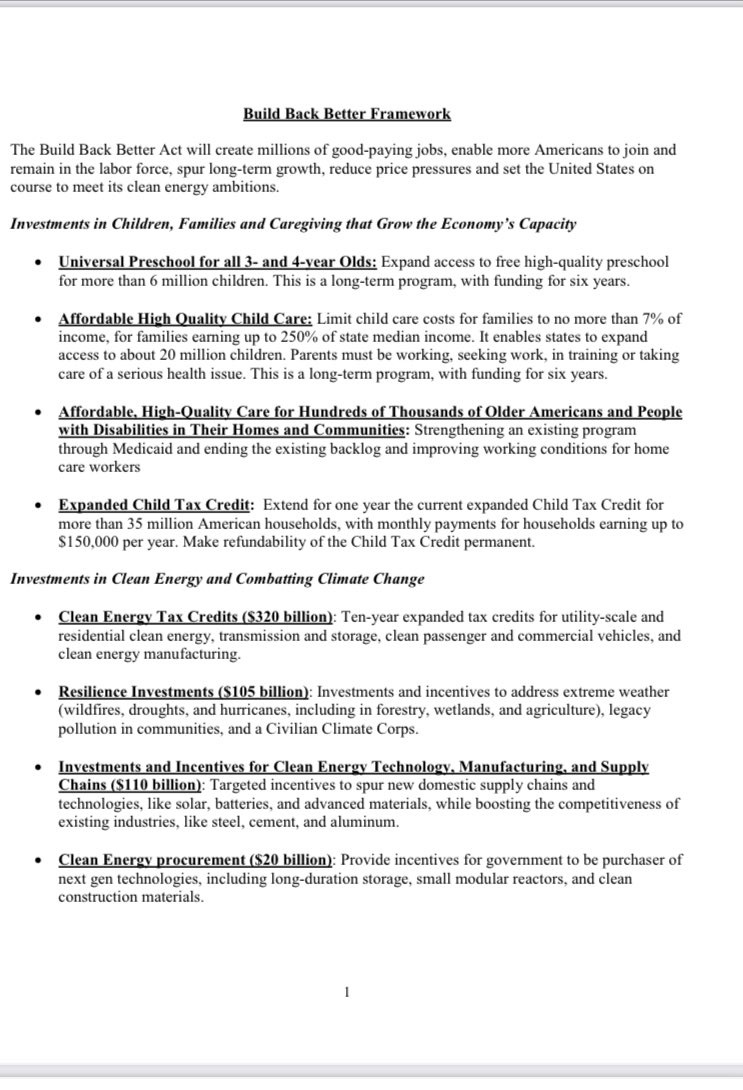
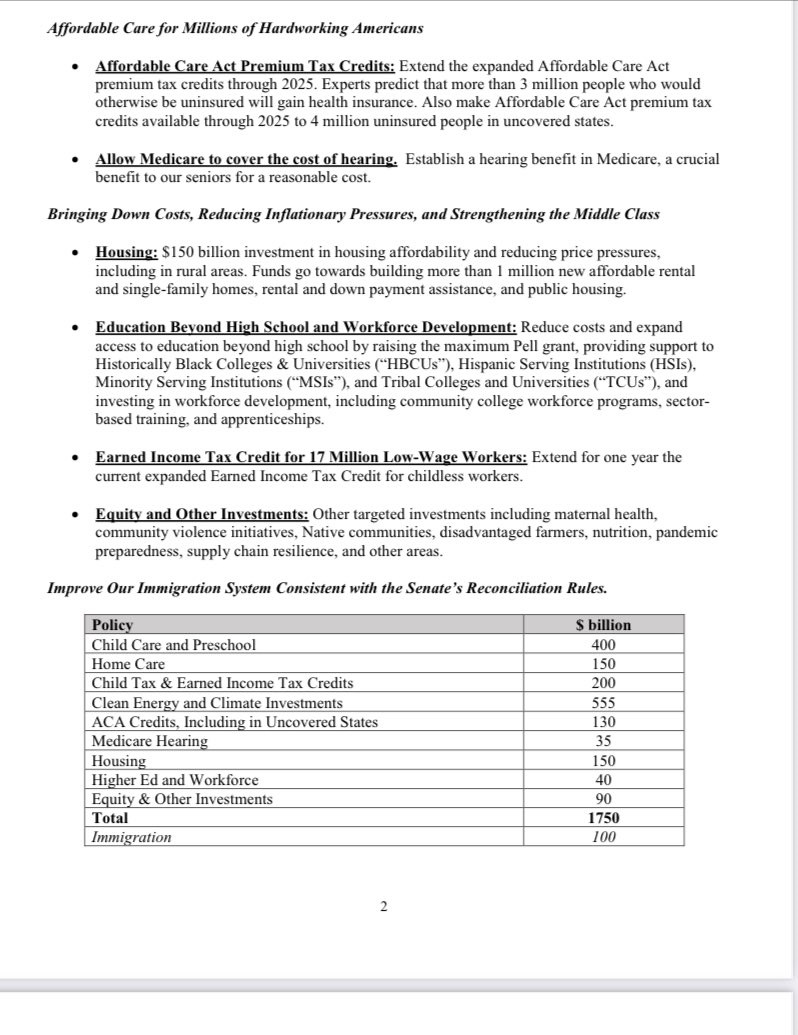
0:40:34 Andrew: I thought I would do a very, very simple thing, and that is to compare the framework. And I've uploaded the Biden administration released kind of a three page talking points to the press. I've uploaded that to to our Opening Argument server. And there's also they rolled out. They clearly had someone typing this up all last night at WhiteHouse.gov slash build dash back dash better. There's now the summary of the framework. So you can go there and then what you can do is compare the things that are on that list that are supposedly part of the agreed upon framework to H.R. 53 76. Right.
0:41:19 Andrew: That's the full three trillion dollar build back better act. Right. And and and again, remember, I've picked this for a couple of reasons. Number one, you there's been a lot sort of back and forth since the beginning about what should go into this act. This is what progressives in the House of Representatives introduced as legislation. So it's a fixed point. We can use the summary by the Congressional Research Service. So, you know, this isn't just, you Know, what Andrew Torrez is telling you. This is what an objective third party has said. This was the pre-Sinema and Manchin goal. So how much did we have to give up to pacify, you know, those two? And I think it's fair to call them dinos, right? Democrats in name only, in the sense that if you look at a map, Sinema and Manchin are way to the right of everybody else in the Democrats in the Senate, Yeah. Right. There Are 48 pretty densely clustered blue dots from left to left center. And then there are these two, you know, Sinema, Manchin that are, you know, scarily close to Lisa Murkowski and and Susan Collins.
0:42:19 Thomas: And one of them, it kind of makes sense, given that he's in in a really, really, really red state, the other one, not going to name names, makes no sense and is even more infuriating but Andrew, listener Thomas S asks, "When you have two people holding an entire party hostage and doing all this crap, is the best course of action to just say, 'Ah, Democrats are the worst'? Is that the way forward? Is that way to do it? Will that be the most productive way to move, move forward?" Like, if you've got two people in a bank holding 48 people hostage, do you come in, you're like, "Well, there's 50-50, bank robbers, there's 50 bank robbers, they're all the same"? Anybody
0:42:26 Andrew: He's. Yeah. Yeah. Hundred percent.
0:42:49 Andrew: I mean, if you if you think that you're you probably already stopped listening to the show, right? Yeah.
0:43:05 Thomas: In that bank is trying to rob the bank, is that, though, is that what you do? Or can we be an adult here and understand the situation, what's happening? If I see one more post, "Ah, Democrats," it's like, come on,
0:43:07 Andrew: Yeah.
0:43:17 Andrew: I would say is, um, I, retweeted out, um, just a few minutes ago, um, who, who posted on Twitter, sure would be a nice break from the Manchin and Sinema show if some press would ask, say, Susan Collins and Lisa Murkowski their take on stuff like, like, family leave or vision and dental care for seniors. Republicans get to be against popular legislation without any heat whatsoever.
0:43:33 Thomas: Yeah, yeah, right.
0:43:40 Andrew: Right. Remember, they are standing united in this. So every time you say Joe Manchin, you know, one man canceled family medical leave for, you know, 167 million Americans, he was aided and abetted by 50 Republicans who said, no, we're not talking about any of this. So, you Know, yeah, yeah.
0:43:49 Thomas: Right. No. You're totally right. I mean, press the is broken in this country, honestly, I don't mean that in a MAGA way, but like, it really is just geared toward the fight, the ups and downs, who's on top, the blah blah blah. It's like, why don't you ask every single Republican senator why they don't think old people should have dental and fish, like, do we never get to do that? No one ever does that. It's just assumed you get to be, be for bad things and against good things, because, you know, that's the party. Yeah.
0:44:13 Andrew: Yeah, right. No. Yeah. And then when you run for president, you get to pretend that you're a compassionate conservative. And anyway. All right. So let's do the comparison. HR 5376 is summarized by the Congressional Research Service as having 22 discrete items. Of those 22 discrete Street items, 13 word for word are in the framework. Range from, you know, some kind of trivial elements here, like management of the national forest system, job placement and career services, safe drinking water, electric vehicles, public health infrastructure, housing, rental and homeowner assistance programs. That's a million new affordable rental homes, and $150 billion in housing affordability. Tribal infrastructure, that's $90 billion for indigenous peoples. Wildfire prevention, drought relief, conservation efforts, climate change research, that's a hundred and five billion dollars.
0:44:26 Thomas: Wait
0:45:16 Andrew: $90 million in small business assistance and development. Transit services and clean energy projects in low-income communities, $110 billion as part of the Justice 40 initiative. We'll talk about that in a second. Obviously, the largest one, free universal preschool services, that is in. That's the top line item that is funded for six years in the framework. All three and four-year olds, no means testing, universal free preschool. That is.
0:45:49 Thomas: For real, because that's going to be like, game changer for me. Wow.
0:45:52 Andrew: Yeah, absolutely. No, no means testing, that was eleven, twelve, health benefits for eligible individuals who reside in states that have not expanded Medicaid. This addresses, this, that in two ways, fixes, it, a four million person gap in red states. I mean, the number of people who are going to benefit from this program and then turn around and vote for Donald Trump in 2024 is is staggering. But, yeah, provide
0:45:53 Thomas: Yeah, yeah, yeah, read the book, "Dying of Whiteness," everybody, it's the best, it's so good, it's such a great book.
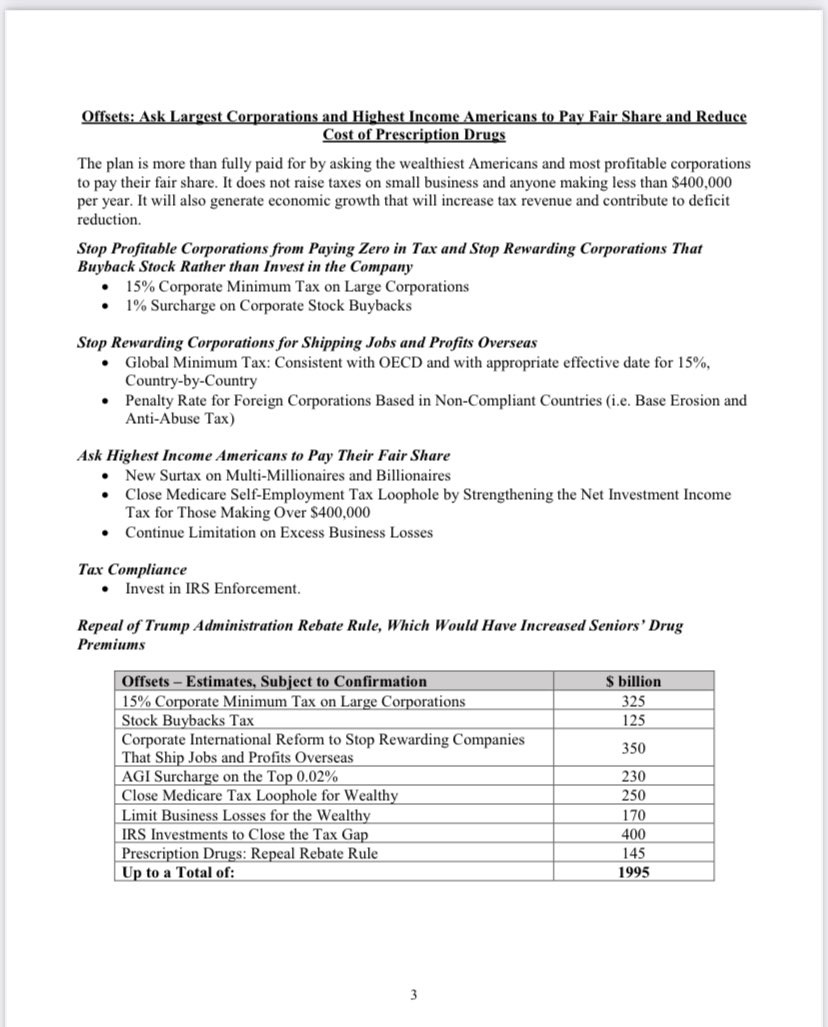
0:46:23 Andrew: Zero dollar premiums for ACa plans in those states that have locked the red states that Have locked people out of Medicaid. And there are 800,000 older Americans and Americans with disabilities who are on state Medicaid waiting lists. Improves that coverage in order to those folks off the waiting list onto Medicaid. And those 12 are all programs. Also, remember that the Build Back Better Act was supposed to pay for itself by taxes on billionaires or corporations and high income individuals. That is also in the final package tweaked a little bit. But but here's the combination of things that gets to about two trillion dollars in revenue. To excuse me, to two trillion dollars in Revenue.
0:46:56 Thomas: Right.
0:47:08 Thomas: Billion I was gonna say two billion dollars
0:47:10 Andrew: Yeah. What's a what's a few billion among trillions?
0:47:11 Thomas: That's that's rounding yeah, that's like, if I'm like, "Hey, how are we gonna pay for this bill?" And I empty my pockets and I got five bucks here, that, yeah, that'll do it.
0:47:14 Andrew: Yeah. Yeah, that's that's a billion to the nearest billion. And that's rounding up. Anyway, trillion dollars in new taxes. Here's how that breaks down. Fifteen percent corporate minimum tax on large corporations.
0:47:21 Thomas: Yep, yep, so two trillion dollars of taxes just Elon Musk, and that's it's already, already there, oh,
0:47:37 Andrew: Yeah. No, it is if you if you're over a certain size, that size is obviously still sort of up for negotiation. The larger you you make it the less revenue this generates, you have the minimum corporate tax of 15 percent, a one percent surcharge on corporate stock buybacks. This is such a great idea. Yeah, I'd love to see it higher than one percent, but, but, but, fine, one percent, that's going to generate 125 billion dollars in revenue, um, yep, yeah, yeah, uh-huh, a global minimum task, um, basically these are trying to close loopholes for, uh, companies that, that, that we register overseas.
0:47:59 Thomas: This is great, geez, percent on corporate buybacks is going to generate 125 billion? Wow, okay. So that's a lot of stock buybacks that are happening, so no longer, yeah, can you just be like, "Oh, we've had losses for so long that we get to offset for, you know, eternity," Exxon, whatever, never paying taxes, it's, instead it's, no matter what, no matter, matter what gimmicks, no matter what bookkeeping stuff, which again, who knows, some of it may be legitimate losses, but all that, no mater what, you're going to have a minimum tax of 15%.
0:48:46 Andrew: Yep.
0:48:46 Thomas: That's incredible. Why didn't we do that ages ago?
0:48:47 Andrew: Yep, I knows?
0:48:49 Thomas: But Andrew, if they come for the $200 billion corporations, they might come for me next.
0:48:54 Andrew: Right. They might come for us. Yeah. The other thing is we still need the Liz Warren proposal of.
0:48:56 Thomas: Yeah. Wealth tax?
0:49:03 Andrew: Well, we still need the wealth tax, but we also need it, it is such such common sense. I don't know. I wish it were a part of this bill that says, yeah, the number you report to the IRS has to be the number you report your shareholders on your on your 10 K's and 10 Q's. The surtax on multimillionaires is on the top zero point zero two percent. So It will definitely not reach below individuals making $400,000 a year or less. It is defined as the top 0.02%.
0:49:03 Thomas: Oh Which
0:49:37 Andrew: I don't know where that line is going to be. Yeah.
0:49:37 Thomas: Is so much money. Who would be against, oh my God, that drives me nuts. There's so much to go around, Andrew. There's such a much wealth at the top in this country that we do tiny, tiny taxes here. Just a little bit of people and corporations corporations that are obscenely wealthy. We won't even notice this tax because our names aren't Elon Musk and Jeff Bezos and, you know, Apple and other corporations and all that. And it's going to generate trillions in revenue. I cannot believe it's taken until now to happen. It's just unbelievable.
0:49:43 Andrew: Yeah. 50 50 Republicans, 50 Republicans are against that.
0:50:10 Andrew: So when we get a final bill, obviously, I will go through all of the revenue generating provisions. Right. This is just a framework. We'll see how that that shapes out. But it is 100 percent consistent with prior Build Back Better Act that was introduced. Right. H.R. 5376. So that's 13 of 22. But I'm not I'm not done of the remaining nine. Three of them are probably in, but they're like not worth highlighting in the framework. And we don't have a bill yet. They were in the original bill. So it will be very easy to restore these in reconciliation. Those are cyber security programs, infrastructure and administration at the Department of Veterans Affairs and And a regulation requiring the Department of Health and Human Services to negotiate maximum prices for certain brand name drugs under Medicare.
0:50:26 Thomas: Yeah. Ooh, Wait, that's in. I thought that was the thing that Cinema cinema idiotically was against.
0:51:01 Andrew: No. Didn't see a specific Sinema objection to that. If she objected to that, what I said is those three things are out or not listed on the framework. And so you can consider them out. But they are they were present in the original bill. So they could be restored during reconciliation. If that's if we want to call the the maximum prices out and out, we can call that an out.
0:51:12 Thomas: Okay.
0:51:27 Andrew: OK,
0:51:21 Thomas: I I just want to say that no matter what gets passed here, primary Kyrsten Sinema and Kyrsten Sinema and get her out of it, like, it's just this is such, this is so absurd, like, even though what's going to get it through. Because again, progressives are going to have to vote on it. We talk as though it's mentioned in Cinema. And it is because when you are an awful centrist, you have the advantage of nothing benefits you. So like doing nothing benefits Republicans. Doing nothing benefits the very right-leaning Democrats. So they do have that advantage. But all that said, in order to pass anything, you have to get Bernie Sanders' vote. And you have to get Elizabeth Warren's vote. Those are votes that go into this. So what gets passed will probably end up being an amazing bill, like, one of the best bills passed in in recent history in decades. Even when that happens fuck Kyrsten Sinema, get her out of office, she shouldn't be in there.
0:51:32 Andrew: Yeah. Oh, yeah, absolutely. Yep.
0:52:16 Andrew: Morgan and I just did clean up on all 45 and broke the story of the big name Republican donors who are lining up to give the maximum to Kyrsten Sinema. It's very clear. Right. Like, yeah,
0:52:23 Thomas: God. Could you imagine who is going to vote for, who's gonna knock doors for her?
0:52:33 Andrew: Republicans.
0:52:33 Thomas: Who's, what is her plan? I'll never understand this. Please.
0:52:36 Andrew: It's the it's the Joe Lieberman plan. Anyway. So now we're at 15 of 22. We've got one that's definitely out? That is the maximum prices on drugs. But we have 15 that are probably in, right, the remaining seven items. Five of those are partially salvaged. Now I want to be very, very honest here about each of because they they all got reduced. OK, but they did not get reduced down to zero. So I want to look at kind of the initial bill and then what what what it got cinema down to. OK, so the first the initial proposal was free child care for children under the age of six. Yeah, that that got means tested. Right. So it is now there are two components to it. The first is a requirement, regulation and tax credit such that if you make three hundred thousand dollars a year or less, that no more than seven percent of your income that the child care can cost no more than seven per cent of your Yeah.
0:53:15 Thomas: God.
0:53:39 Thomas: That's amazing.
0:53:40 Andrew: It really is huge relief to a ton of.
0:53:43 Thomas: Childcare is like 90% of our I can't even tell you how expensive this crap is. In California, it's unbelievable. It's double a mortgage. It's insane.
0:53:48 Andrew: Yeah, yeah, Yeah. And in addition to that, what the bill does is extends for another five years the American Rescue Plan's child tax credit. That is three hundred dollars a month for children under the age of six and two hundred and fifty dollars a month for children age six to 17. That is means tested down to families making up to one hundred and fifty thousand dollars per family, which, yeah, is going to exclude. Right. And again, think about this. Where does that where does the burden of that line fall hardest? It falls hardest on Democrats who live in high income states like California, New York, Illinois. And yet, right, like in order to achieve good public policy, you know, all of these low and middle income voters will get substantially increased, monthly payments for for their children and access to caps on on maximum costs for child care. So, you is it free child care for everybody? But no, it got means tested. Is that a bad change? Absolutely. That's a bad change for 70 percent that that now covers. Is this still way better than the alternative? Of course it is.
0:54:17 Thomas: Yeah. Yeah,
0:55:09 Andrew: Right. I mean, this is going to make a huge difference to working families across the country. OK, that's number one. Number two, the original Build Back Better bill expanded Medicare to cover dental, hearing, and vision care for seniors, um, that was reduced to just hearing. I don't know why I I, I
0:55:25 Thomas: We got a quote from Kyrsten Sinema. Do old people even need their teeth? What possible justification? You're really doing the Lord's work there, as they say, cinema. That's amazing. Great stuff.
0:55:30 Andrew: Don' t know, uh, Yeah, Yeah, Yeah, So, So that's bad.
0:55:40 Thomas: Let them eat puree. I don't know.
0:55:41 Andrew: Yeah, I like that, there you go. Six semesters of free community college, that got substantially changed, again, right, it got substantially change by being effectively means tested. So, right, this includes increased funding for Pell grants for the more than five million students enrolled in in community colleges, expanded access for Dreamers to community college, plus direct investment in historically black colleges and universities, tribal colleges, and minority-serving institutions. Again, not nearly as good as free college, but right? Considerably better than nothing. Next up are, and we've already talked about a lot of the climate change provisions that are in this bill.
0:56:28 Andrew: The original bill was going to have a methane fee or tax attached to petroleum and natural gas facilities. There was no chance that was surviving Joe Manchin. Here's the way in which that got chewed up and spit back out in this proposal. There are kind of three major areas of green investment. So the first is consumer rebates and tax credits for clean energy and electrification. That's three hundred and twenty billion dollars. That's a lot for things like rooftop solar panels, passenger and commercial electric vehicles and targeted grants and loans for rural clean energy manufacturing. The second is $60 billion for targeted incentives to companies for new domestic supply chains for wind turbine blades, solar panels, electric cars, to spur the manufacture of the components necessary for green technologies in the U.S.
0:57:26 Andrew: That includes solar batteries and advanced materials. Significant component of that are application of rare earth minerals. Need certain kinds of minerals in order to make the batteries that then are kind of key to rolling out green technology. And the idea is to up the supply chain and encourage that production domestically. That's $110 billion. And then there is the new Clean Energy and Sustainability Accelerator. That is essentially a Grants proposal that will invest in projects around the country. And under the Justice 40 initiative, 40 percent of the money that's doled out must be spent in disadvantaged communities.
That's also rolled in with one hundred and five billion dollars for the creation of a civilian climate corps with three hundred thousand new jobs. And the promise is that that will, quote, look like America, end of quote. So you put all that together and and I both agree that climate change needs to be, you know, items one through 70 on on the agenda. Is it immediate and there is so much more that needs to being done. But those are those good programs, they certainly are the exact opposite of what we saw over the last four years.
0:58:47 Thomas: I Got a listener, Thomas, has a question. This isn't enough on climate. What do you think the best way to get any further action on climate change done is? Do you think it's to complain, be complacent, not elect Democrats and let Republicans take over? Will that help us get more climate change legislation in the future? Or would the best course of action to be to recognize that we just needed more senators who want to do the right thing on climate change and therefore try to keep the Democrats we already have and elect more?
0:59:16 Andrew: I'm going to give you a serious answer to a sarcastic question. And And it is this four decades longer than that, actually, five decades. Republicans have faced that exact same question when they talk about abortion. Right. And when they get their congregants together and whip them up and it's like, well, you know, So so-and-so says that he supports abortions when, you know, in the case of rape or incest, they've got together and basically said, like, right. But what we're going to do is line up behind anybody who says they're pro-life and line up against anybody who Says they're Pro-Choice. That's our litmus test. Don't go nitpicking. Don' you know. Just get with the program.
And they've done so incredibly effectively. So I would suggest if, like you and I, you believe that climate change is the most important issue facing this country, facing the world, that we are headed towards a five degree cliff, a five degrees Celsius cliff from which there may be zero recovery. Right. Like this is serious stuff. I delivered a lecture on this. Right. Right. We're all going to die. If you believe that, why not just have a litmus test? And the litmus text is ask the candidate, hey, do you believe manmade climate change is real and that we need to respond to it? Or are you in the it's a Chinese hoax camp?
0:59:55 Thomas: Yeah.
1:00:38 Thomas: And by the way, when you're in a primary, you can evaluate among candidates who To have the strongest plan. It's very simple. Know I harp on this a lot, and it's just because I see the negativity. I see that the people, and it just, it scares me to death because we are, we are 10 minutes away from, you total collapse when it comes to our democracy and all this. And there's exactly one party that's responsible, and there's exactly one body that has a chance to prevent that collapse, and to say nothing of climate, climate change also.
And it just drives me nuts to hear so many people, they talk as though they're just the audience and they're not an active member, you know, where it's like, oh, people aren't going to vote for Democrats because of the thing, because of this compromise bill, Democrats are going to lose elections. They get to be like the prognosticator and the pundit instead of just what I see when I see that is, yeah, no, no, this sucks that this bill got compromised. It really does. And it's probably true that people will be less enthusiastic for Democrats. But I am not a person who just gets to sit there and react to everything in that way.
I'm someone who wants good outcomes. And I want to try to do everything I can to prevent the disaster. So instead of sitting and contributing to this wealth of, ah, Democrats, they blew it. Oh, why even elect Democrats? Instead of being that, I'm saying, okay, what can we do to try to counter that?
1:00:42 Andrew: Oh, yeah. Right. Yep.
1:02:01 Thomas: What can we do to prevent this thing that we all are prognosticating on, which is not helpful? I just hate that people take this passive role when it suits them. All of sudden, they get to be part of this crowd that doesn't know any better or something, that is just going to see the broad odd strokes and see the Democrats let them down rather than what I know they are, which is a more sophisticated person who can identify the problem was Kyrsten Sinema and Joe Manchin and not having more Democratic senators in office. It just blows my mind. Like, I don't get why people make this move of like, nope, I get to just sit here and do nothing. That will be the better thing. I get to complain and do not. The better thing is you are part of this system.
1:02:47 Thomas: You are part, part of the people you are talking about. And what you can do is try to do everything you can to keep engagement up and to work really hard to elect Democrats in every single position of government.
1:02:59 Andrew: Mean, amen. I'd like to clip that and then maybe replace our intro quotes. I We go to the last of the bill and then kind of summarize it together. The other item that got modified in a way that we'll have to detail when the final bill comes out is that the original Build Back Better Act had a path to permanent resident status for certain classes of aliens, in particular those who entered the United States as minors. That has now been changed to, quote, immigration reform that is consistent with the Senate's reconciliation rules, end of quote, and with $100 billion attached to it. I actually think that even though it's a move to the right or the center or whatever, I actually really think that is smart.
1:03:45 Andrew: I don't think you can constitutionally do the kind of immigration reform we need in the reconciliation process. And I've talked about that before. So that, that got changed. It got weakened. But, but I think that that reflects reality rather than Democratic opposition. So there was 21 items that, that leaves only one other that was unambiguously cut with no, uh, no substitution, and that is the 12 weeks of paid family and medical leave, um, that's bad that that was cut, I, I, I, there's... there's nothing, and there's nothing that mitigates that. So summarizing that together, here's what you can say: Mansion and Cinema cost us, they cost us family and medica leave, pit 12 weeks are paid family medical leave, and the cap on certain prescription drugs.
1:04:35 Thomas: Well, cost us. But if there were two Republicans in their seats, zero, you get nothing, nothing. You get nothing and you get no judges. You know, complete disaster. So, like, and again, my answer is primary Kyrsten Sinema.
1:04:38 Andrew: Yeah.
1:04:49 Andrew: Yeah, but I think it is But I think it is fair to say as a As a Democrat, we've been negotiating with ourselves, we have 50 votes Republicans wouldn't have this problem. So the question is what did we give up
1:04:52 Thomas: Oh, of course. Yeah, yeah. Of course. Absolutely. I agree. Well, they might. I mean, remember, they tried to repeal, Obamacare and they couldn't, you know, like they, yeah, anyway.
1:05:07 Andrew: That's True. Excellent point. An excellent, an excellent point. So here's what we gave up in the mansion and cinema negotiations. We gave up two things unambiguously. The 12 weeks of paid family medical leave and inexplicably the negotiation on caps on on certain pharmaceuticals.
1:05:28 Thomas: I'm going to move to Arizona and vote against Kyristen Sinema and that's how much I, God, not really.
1:05:30 Andrew: Oh, That's a that's an excellent idea. Uh,
1:05:33 Thomas: I can't tell you how much I hate Arizona. I am not doing that. But I almost would. It. That's how mad I am about her pointless stances. Again, she's not in a red state. She's in a blue state. That is why it is so infuriating.
1:05:34 Andrew: Yep. I know, I know, uh, we also gave up the dental and vision care for seniors, um, for reasons. Uh, and then we got watered down versions of, uh, climate change, uh, and community college funding, uh, and the child care provisions that that got that those got means tested and watered down. Um, I certainly agree, I would rather none of those five things happened, uh, but I do have to say, uh, and then this goes back to your point, um, this were, if this bill were being proposed in the first place, you and I would look at it and go, okay, uh, like for it to go a little further here here and here but it's
1:05:51 Thomas: Yeah. Yeah, yeah. Oh, the framing is everything here. That has been the problem for Biden for a long time. We start off, for some reason, I don't know, we do the opposite of what you should do, which is we start off all expecting this massive thing. We throw out a number of like $7 trillion, and then we get down to merely nearly historical. And then we're like, wow, look at how much we lost. And I don't understand why this keeps happening. I'll go back to a problem with the media, I guess. Again, not that we should not be upset over the things we've lost. It's not to say that. But it is very weird that if you put this another way, if you started from nothing, and if you starting from, by the way, Trump being president. And then we're like, hey, next year, you get a trillion package. In addition to the already trillions of dollars we've spent. It's amazing.
1:06:23 Andrew: Great. Right.
1:07:09 Andrew: Yep, absolutely. So there you go, that's our quick breakdown
1:07:12 Thomas: Over time. Yeah. A quick breakdown. Says So that's that. Well, obviously, there's going to to be much more on that. And we, you know, we still don't know for sure what, what will all remain after reconciliation. Right. And that's confusing because there's two reconciliations we're talking about, right? We're talking About budget reconciliation, which is how we're even passing this. And then there's also reconciliation between the house and the Senate versions of the bill. Correct.
1:07:13 Andrew: Yeah, I know, exactly. Right.
1:07:37 Thomas: Okay. So we'll, we'll track all of that. Um, great breakdown. Uh, that's all the time we have for that.
1:07:37 Andrew: Exactly. Right.
1:07:43 Clip: Oh, no associate of this firm has ever failed the bar exam. No kidding.
1:07:49 Thomas: All right. We've, even though we're out of time, we, I can't go two two weeks in a row without doing, uh, T3B. Yeah. I won't even remember my emotions in lemonade. I won't, you know, so we got to do it. T3 B Thomas takes the bar exam. Here we go.
1:07:53 Andrew: No, you'll get rusty, yeah. All A woman hired a driver to drive her across town to her sister's house. The driver negligently failed to pay attention to where he was going and drove in the opposite direction of the sister's house. By the time the driver realized his error, it was too late to drive the woman back home. Thus, the driver paid for the woman to stay in a hotel room for the night. While the woman was dining at the hotel that evening, a man man pickpocketed the woman's expensive pair of glasses out of her purse. The woman sued the driver for the value of the glasses. Should she prevail? A, yes, since the driver negligently failed to pay attention to where he was going. B, yes, so long as the woman was not negligent in failing to notice that the driver was going the wrong way. C,
1:08:08 Thomas: The driver was Morgan Freeman.
1:08:57 Andrew: No, since larceny is not a foreseeable result of the breach by the driver, or D, no, since the act of larceny was committed by a third person and not the driver.
1:09:07 Thomas: Okay. I think. I think this is straightforward, but that's famous. Last words. This Um, strikes me again, foreseeable, uh, as language in there that makes sense. We've, we'v had, is it Paul's graph? You know, there's... there's I don't know if that's directly related, but when we talk about causality and what actually you're liable for in these cases, it strikes me as you can't be liable for a crime that happens to someone, you that you weren't responsible for. Like, who knows? Where does that end? You know? Just because you drove the wrong way, you could be responsible for like someone murders her. You're the murderer. Someone steals millions of dollars. You owe them millions of dollars. I think that it's got to be more directly related to the negligence. And so when I look through the answers, so A, yes, since the driver negligently failed to pay attention to where he was going, you know, I'll keep that as like the yes answer that I would pick.
1:09:57 Thomas: But also I like this, B, yes. So long as the woman was not negligent and failing to notice the driver was going the wrong way. That's an interesting one. I don't know what to make make of that. I think that's, there's no talk in this question about contributory negligence or what the, I don't think, let's see. I don'T see any discussion of what standard of negligence we're under. I DON'T think it matters ultimately, but I'm just entertaining the notion. If I were to pick a yes answer, actually don't know. I can't tell because it doesn't, doesn't tell me what, what burden of thing you were under. So I don't, I'm not going to pick the yes answers because they're wrong, so I'll just forget that. C, no, since larceny is not a foreseeable result of the breach by the driver. C is really jumping out to me. I think that is the answer. If we're going to consider the other no answer, it would be D, no since the act of larcenY was committed by a third person, not the driver, it's interesting.
1:10:50 Thomas: I mean, I'm definitely between C and D. I'm between two no answers. Which one is the better no answer? I think I like the language of larceny not being a foreseeable result because you are liable, I think, for the foreseeable results. I mean, that's why the driver paid for the hotel room. If this was a dispute over that, I think the driver would be out of luck. He'd be like, yeah, you caused this. You got to pay for the motel room or whatever. But larcenY, not foreseeable, that is the language I think makes sense. D, I could see a universe in which this is super tricky and D is somehow the correct no answer. But I'm between C and D. I'm going with C. Let's see what the coin says. And the coin agrees with me. So hopefully this is a straightforward one for me and the coin. The coin and I. C, final answer.
1:11:36 Andrew: I like how you've kind of gone to rooting. You know, you're like, well, I'm in solidarity with the coin because we have to take the bar together.
1:11:44 Thomas: Well, no, you don't know how I'm rooting. When there's one that I'm really confident in, I hope the coin picks the opposite one. When There's One I'm not at all confident in. I hope that the coin agrees so I don't get embarrassed by an inanimate object. So So yeah, there's a lot of coin game theory that goes on behind my eyes that I don't share with the audience.
1:11:58 Andrew: Love it. That is outstanding. All right. And if you'd like to play along with Thomas and the Coyne, you know how to do that. Just share out this episode on social media. Include the hashtag T3BE. Include your guests, your reasons. Therefore, we will pick a winner and shower that winner with never-ending fame and fortune. Fame and fortune not guaranteed.
1:12:19 Clip: And thank you, Let's go!
1:12:20 Thomas: And just a reminder, our live Q&A, YouTube Patreon Q&H is coming up Tuesday, November 2nd at 4 p.m. Pacific, 7 p.м. Eastern time. Time, come join us, can't wait to see you, it's been way too long, very excited, and let's thank our new patrons, Andrew, who might be joining us on the q a and might be asking some questions uh and I'll start us off. Thank you to Kristin Leist, Craig Markham, John Party, and Michael Stevens. Thank you guys so much. And your turn, Andrew. Yeah.
1:12:41 Andrew: I sure hope so. So I thank you to Sam, Lauren J. Corduroy, Brittany and John Panky. And we really we couldn't do the show without supporters like you.
1:13:04 Thomas: John, relative of Hank? Hank Hank.
1:13:06 Andrew: Oh, nice. Thank you. Thank you, Sam.
1:13:10 Thomas: Ernest Panky, that'd be the no uh gotta squeeze in my dad jokes where I go
1:13:11 Andrew: Thank you so much, I love that. I love it. Your dad jokes are also like, you know, 50s doo-wop jokes like that. That's so great.
1:13:23 Thomas: Yeah, wholesome, wholesome dad content here. All right, that's our show. Wow, that was another big one there. So much good information we're squeezing into this bad boy. Please share this show, especially where you see people sharing that Rittenhouse thing. I think it's important to get the facts there. And thank you so much for listening. We'll see you next time.
1:13:42 Andrew: Until then.
1:13:42 Clip: I move for a bad court thingy. You mean a mistrial? Yeah, that's why you're the judge and I'm the law talking guy.
1:14:16 Clip: www.openargs.com. Be sure to join the Facebook group at facebook.com slash groups slash Yodel Mountain and follow us on Twitter at OpenArgs. This podcast is a production of Opening Arguments Media LLC, all rights reserved. It is produced with the assistance of transcriptionist Heather Leverage, production assistant Ashley Smith, and additional contributions from Morgan Stringer and Debra Smith. Special thanks to Teresa Gomez, who runs our live shows and heads up the OA Wiki, follow at OA Wiki on Twitter. Additional thanks to the moderators of the Opening Arguments Facebook community, Emily Waters, Alicia Cook, Eric Brewer, Natalie Newell, Brian Ziegenhagen, and Teresa. And finally, thanks to Thomas Smith, who edits the show and created the fabulous theme music, which was used with permission.